Anti-Immigrant Laws Threaten All Students
Resources needed to support classrooms across the country could also be at risk. For states whose school funding formulas rely heavily on daily attendance, an overturned Plyler could result in fewer resources as states would face steep enrollment declines. The result may be fewer teachers, school closures, and overstretched budgets. Communities with large immigrant populations would experience the effects first, but the ripple effects would spread nationwide.
Additionally, these laws impose administrative and paperwork requirements that would further strip money from schools. Missy Testerman, 2024 Tennessee and National Teacher of the Year, who has been teaching in the state for 33 years, explains how resources would divert from classroom instruction: “The responsibilities outlined in TN House Bill 793 would place additional duties on school personnel who are already stretched thin. Teachers, principals, and front office staff are educators and school leaders. They are not trained in immigration law or in verifying the authenticity of legal documents. Asking them to take on those responsibilities adds another layer of complexity to already demanding roles.”
This is especially perverse, given that many lawmakers in Congress from these same states are demanding that the federal role in education be tossed aside and data no longer collected even as these same states want laws that impose new paperwork and reporting requirements on students’ immigration status.
These laws are not reflective of school needs or teacher input. As Testerman powerfully explains: “I have not heard educators asking for legislation like this, not even one. Not because teachers ignore difficult issues, but because they believe their role is clear: to educate students and prepare them for the future. That means all students, every last one of them.”
But these efforts are reflective of plans laid out in Project 2025, in which The Heritage Foundation seeks to overturn Plyler. The ultimate goal of these policy choices to impoverish, undocumented families so they will “self-deport.” Let’s be clear: this misinformed concept of “self-deportation” comes at severe economic and social costs to this country.
The economic impact of Plyler-inspired deportations would be severe. Blocking children from public education would stunt the nation’s knowledge base, while families looking to other countries for education would drain the number of available workers in the U.S. One estimate is that the U.S. economy would lose 350,000 jobs, U.S. GDP would lose more than $2 trillion, and the cost to states and localities would be more than $600 billion in lost tax revenue.
This moment also strikes at the basic fabric of U.S. democracy. Equal protection under the law is at the core of the American society, and it is that tenet which is central to the Plyler decision. As Justice Thurgood Marshall wrote in his concurring opinion, “[D]enial of public education,” he wrote, “is utterly incompatible with the Equal Protection Clause.”
Let me be clear: If lawmakers slash equal protection for one student group, every student living in America is at risk of being the next person on the constitutional chopping block.
Standing Up for Undocumented Students
Every student in this country is brilliant — and shunning that brilliance is a stain on the nation’s character and an undermining of the very American ideal that every child deserves opportunity.
While each state proposal may be local, together, they represent a much larger national effort to redefine who deserves access to public education. In Tennessee for instance, the legislation will do more than effect undocumented students. The law’s documentation requirements could also lead to denial of public education to other students, including students experiencing homelessness, students in foster care, and students who have experienced natural disasters.
America’s commitment to educating every child is not just a legal obligation — it is a moral and economic imperative. It is central to who we are as a nation. And if we allow one state to undermine Plyler, others will follow, and the consequences will be felt in classrooms from coast to coast.
Advocates, families, and all others who care about public education need to pay attention to what is happening in Tennessee and other states. We need to stay vigilant and keep defending the rights for all students to receive an education that gives them the opportunity to add to the great tapestry of the American story.
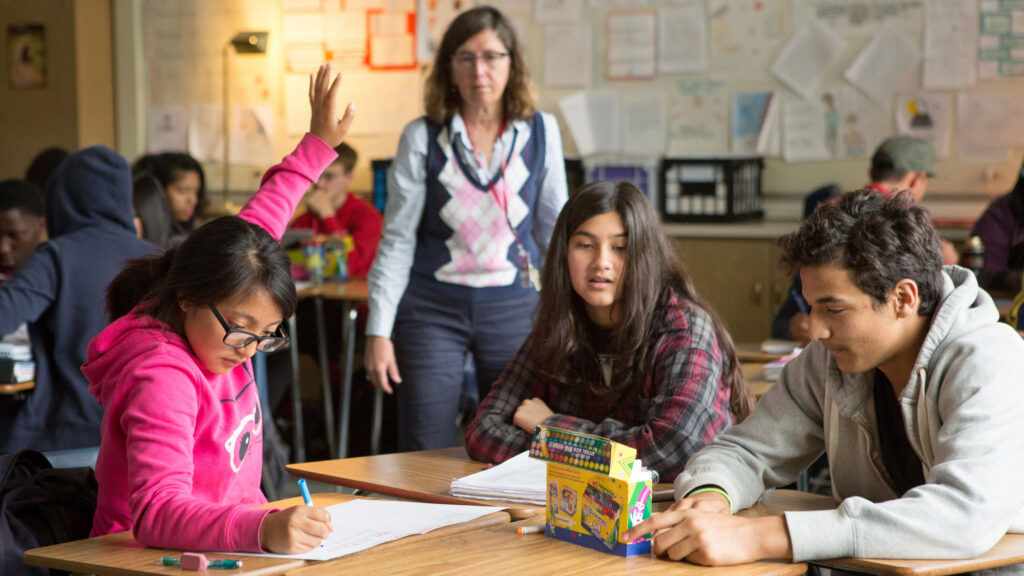
Photo by Allison Shelley/The Verbatim Agency for EDUimages

 March 17, 2026 by Denise Forte