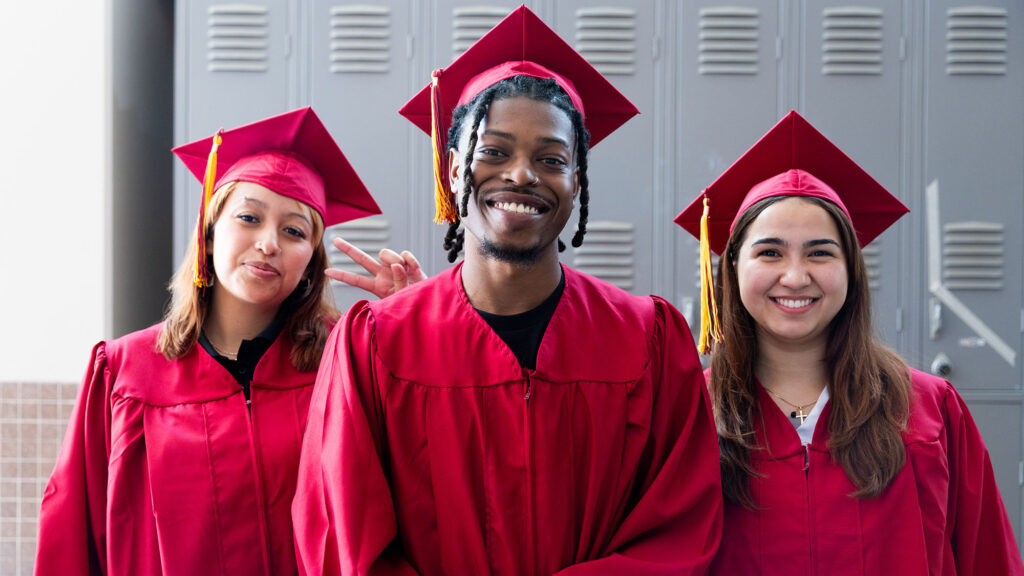
It’s high school graduation season — a time for caps, gowns, and celebration. But beyond the ceremonies, it’s also a major turning point. For many seniors, this moment is filled with excitement, uncertainty, and big decisions about what comes next.
To get a better sense of how students are navigating this transition, we talked with graduating seniors about their plans after high school and whether they feel ready for what’s ahead. Their stories paint a picture of a generation that’s thoughtful and motivated, but also realistic about the challenges in front of them.
Across these conversations, a few things stood out. Students are thinking carefully about the cost of college, making intentional choices about their futures, and relying on support systems that have helped them prepare for life beyond high school.
Turning Challenges Into a Career Direction
For Amani L., a senior at the Classical Magnet School in Connecticut, the path forward is personal.
This fall, he’ll attend the University of Connecticut’s Stamford campus to study sports management, with a focus on athletic training and physical therapy. His goal? Stay connected to the world of sports — just in a different way.
“I’ve always been into sports,” Lewis said. “But injuries prevented me from going as far as I might have wanted.”
After dealing with setbacks — including a hamstring injury that worsened when he tried to push through it — Amani started rethinking his future. Instead of walking away from sports, he looked for ways to stay involved while helping others avoid similar mistakes.
“I know what it’s like to go through injuries and not handle them the right way,” he said. “I want to help people get out of that tough spot and get back to where they’re supposed to be.”
A conversation with his uncle helped point him in that direction. From there, he connected with athletic trainers and physical therapists and even got hands-on experience working with an athletic trainer at his school’s basketball games.
“That really showed me what it’s like,” he said. “That’s when I knew this is what I wanted to do.”
Getting a Head Start on College
Amani said he feels ready for college because he’s already had a taste of what it’s like.
“We were able to take UConn courses starting last year,” he said. “My school is already pretty college-focused — everything is honors, and we have a full workload every day. Taking those college classes on top of that helped me get used to what college might actually look like.”
That experience gave him a clearer sense of both the academic expectations and the pace of college life.
“I was already getting used to the workload,” he explained, “but I was also getting used to how college classes feel.”
Making College Decisions That Make Financial Sense
Like many students, Amani also had to think seriously about cost.
Although he was accepted to several colleges — including Pennsylvania State University, Louisiana State University, and West Virginia University — financial considerations ultimately shaped his decision. Scholarships made it possible for him to attend the University of Connecticut at Stamford without taking on debt — something that weighed heavily in his choice.
For Amani, it came down to finding the right balance between affordability, opportunity, and a place that felt like the right fit.
Thinking Big and Planning Ahead
For Grayson R., college is just one step in a much larger plan.
He’ll attend the University of Alabama in Tuscaloosa, where he plans to major in mechanical engineering and minor in psychology and economics. Long term, he hopes to become an entrepreneur working in clean energy and artificial intelligence.
“I see college as a chance to learn as much as I can about the world,” he said.
While he applied to highly selective schools like Harvard University, Yale University, Cornell University, and Princeton University, he wasn’t admitted to any of them. Rather than viewing rejection as failure, he sees it as part of the process.
“It’s better to try and fail than never try at all,” he said.
He ultimately chose Alabama because it offered him a full-ride scholarship. The university had also recently invested over $100 million in its engineering program, “a sure sign that they’re committed to growth and excellence in teaching and research,” he said.
As a homeschooled student who’s used to learning independently, Grayson feels well-prepared for college. Still, he knows balancing academics, finances, and personal life will be a challenge.
Starting Earlier and Planning Smarter
Grayson also believes students would benefit from starting the college process sooner.
“I don’t think students are always aware of how many options they actually have,” he said. “I didn’t really start thinking seriously about my plans until mid-junior year.”
Looking back, he recommends starting earlier, exploring different types of schools, and thinking about what kind of environment feels like the right fit.
“College can feel overwhelming,” he said. “But you just have to take it one step at a time.”
He also stressed the importance of school counselors and asking for help early.
“Make your counselor aware of your goals,” he said. “They can help you plan your classes and make sure you’re on track.”
Building Readiness Through Experience
For Graycie M., a senior who will attend Tarleton State University in Stephenville, Texas, in the fall, feeling ready comes from years of growth beyond the classroom.
Through her involvement in 4-H and FFA, she developed leadership skills, confidence, and resilience — qualities she says make her feel “beyond ready” for college and a future in pediatric nursing.
Her journey hasn’t been easy. Born with hearing loss, she spent years in speech therapy and worked through challenges that shaped her confidence. Over time, experiences like public speaking competitions helped her realize her limitations didn’t define her.
For Graycie, readiness isn’t about perfection; it’s about believing in yourself.
Readiness Looks Different for Every Student
These students’ experiences make one thing clear: readiness isn’t one size fits all. Some students feel confident. Others anticipate challenges. Most fall somewhere in between. What matters most isn’t having a perfect plan; it’s having the support, experiences, and mindset to figure things out along the way and keep moving forward.
Their stories also highlight something bigger: preparation doesn’t just happen in the classroom. It happens through mentorship, extracurriculars, and real-world experiences that help students discover their interests, build confidence, and see what’s possible.
As this year’s graduates step into their next chapter, they’re doing so with ambition, realism, and resilience. They may not have everything figured out but they’re ready to take the next step.
Series: Getting To & Through College


 June 10, 2026 by Gabriela Montell