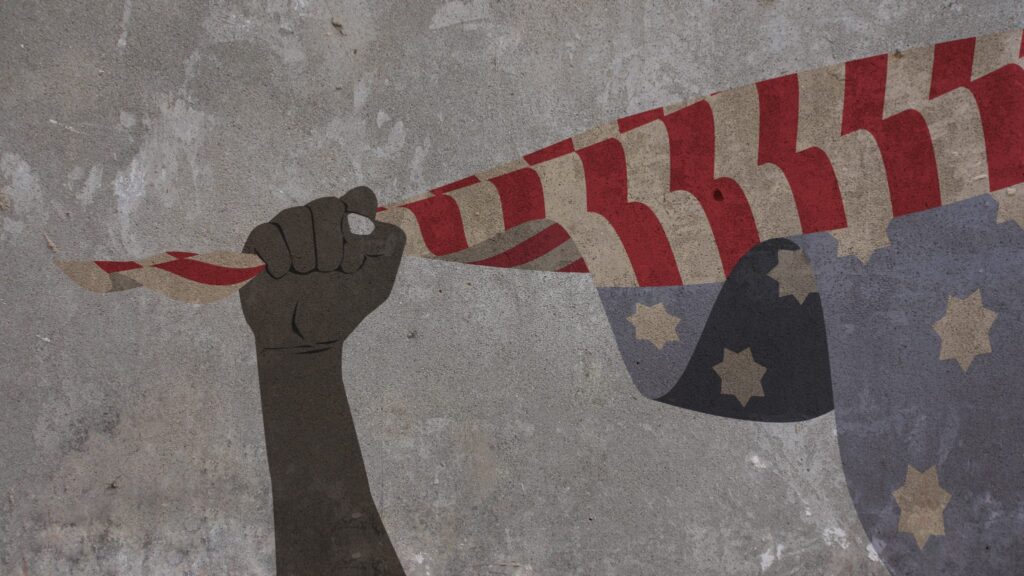
This is the story of a child who, while not real today, represents a future student affected by the upcoming federal voucher tax credit program.
Every day, Maya sits at her kitchen table, school desk, cafeteria table, and bed, while sounding out letters that refuse to stay put on the page. She is bright, curious, and determined—and trying to find the key to fully unlock her brilliance. She refuses to give up, and while her public school is far from perfect, it provides her with the support of a reading specialist who is helping her grasp the letters and words on the page.
Recently, her support at school began evaporating. Budget cuts meant the specialist was reassigned. Her small group reading time grew too large. The individualized help Maya relied on was quietly folded into a system stretched too thin to meet her needs.
A few years ago, when the federal voucher program was first announced, Maya’s parents stayed with her public school. But they now have no choice but to try to get into a private school through the voucher program, and hope it has the supports she needs.
Unfortunately for Maya, after applying, she received only rejections. The schools could not provide the specialized services she required. The resources were too costly, and, according to the schools, “the fit wasn’t right.”
The system failed her: first by stripping resources from her public school, then leaving her only with private options that were not required to help her nor designed for students like her.
As some policymakers celebrate the federal voucher tax credit program as “free money” and expanded choice, they should consider the impact the program will have on children like Maya. The question isn’t whether vouchers create opportunity in theory. It’s whether students like Maya will ever be given a real chance to succeed.
Pushing a False Narrative
Across states, many voucher advocates present the upcoming federal program as free money that is a win for students, families, public schools, and local governments. In reality, private schools and current private school families will be the primary benefactors of these new federal education subsidies.
Here are four circulating claims and four reasons they are simply wrong. Policymakers and families across the country should approach this federal program with caution and concern.
Claim #1: The Program Benefits Public and Private School Students
Supporters argue that the program will help both public and private school students, but there is reason to question this claim. While the law technically allows states to direct funds toward public education, the rules currently being drafted by the U.S. Treasury Department may significantly limit that flexibility. Conservative advocacy groups aligned with the administration are asking that governors and state legislatures are prevented from using these funds as true supplemental support for public schools.
Voucher advocates highlight wraparound supports in public schools, such as tutoring, enrichment programs, and online educational materials, as an eligible expense and benefit of the voucher program. But these services can already be—and routinely are—funded through existing federal programs under the Elementary and Secondary Education Act (ESEA). As such, they are subject to statutorily required federal oversight and accountability conducted by the Department of Education and Congress, unlike this tax credit, which is only 5 pages of text and contains little about student outcomes.
Title I and other federal grants are designed to target students with the greatest needs, ensuring resources are directed toward low-income students, multilingual learners, rural students, students with disabilities, and students who are furthest from opportunity. Crucially, public school students retain their full civil rights protections under federal law. When students enter private schools, regardless of whether they use vouchers, those protections—including key disability and anti-discrimination rights—can be weakened or lost entirely.
The fact that this law emphasizes vouchers over Title I expansion is telling. If historically underserved students were truly the priority, Congress could have strengthened proven public-school funding mechanisms rather than diverting funds to private education.
In practice, public schools are unlikely to see meaningful new investments. Instead, the program appears structured to channel the majority of funds toward private school vouchers, while public schools are left navigating tighter budgets with fewer student supports.
Claims #2: The Program Takes No Money from Public Schools & Keeps Money Local
The claim that federal vouchers will not take money from public schools is false. The program relies on federal tax credits, up to $1,700 per person, and could potentially cost taxpayers $51 billion a year. Those lost dollars are no longer available to support public education, healthcare, nutrition programs, or other supports for students.
Because most of the voucher funds will likely subsidize private school tuition for students who would have attended private schools anyway, as we have seen in states across the country such as Arizona, the public will see little return on this investment. In fact, as I wrote previously, “In Arizona…only 4% of voucher recipients are from D or F-rated schools, which means students who need better educational opportunities and resources are not benefiting. Those same students are also being abandoned in Arizona’s public schools where per-pupil funding ranks 49th in the country.”
If students leave public schools, school budgets shrink despite many fixed costs, like building maintenance and salaries. That means fewer teachers, larger class sizes, reduced services, and fewer academic and extracurricular opportunities for students. And what about students like Maya, who “aren’t a good fit”? Proponents of vouchers speak about choice, but, in reality, it is the choice of the private school, not the family, who to let in.
Government tax policy should prioritize public schools that serve the vast majority of children instead of subsidizing private school tuition.
Claim #3: The Program Has Bipartisan Support
Supporters point to bipartisan backing as evidence of the program’s promise. But that support rests on a federal sleight of hand. Lawmakers are being asked to opt into the program before the rules governing it are finalized. There is a reason states can opt-in before the rules are final – it strengthens the administration’s ability to trap states in the program while crafting rules that will harm students. Agreeing to a program before knowing the rules is not pragmatism; it’s a gamble with students’ futures.
Because policymakers don’t yet know how funds can be used, who will truly benefit, or what safeguards will exist, it’s easy to imagine the best-case scenario. Once the final regulations are released, many state leaders may begin expressing concern.
Claim #4: The Program Provides Additional Resources to Students with Disabilities
Supporters of the program suggest students with disabilities will benefit from additional resources under the program. But for many families, that promise rings hollow. Students with disabilities who remain in public schools may see any new funds pale in comparison to the losses from Medicaid cuts (which, like the federal voucher tax credit program, were included in the “One Big Beautiful Bill Act”), reduced education funding, and staffing reductions caused by budget shortfalls.
Meanwhile, students with disabilities who use vouchers to attend private schools often lose guaranteed access to services and legal protections, such as an Individualized Education Plan (IEP) or to an education in the least restrictive environment, that they are entitled to in public schools. That is why Maya could be turned away for not being a “good fit.” Private schools can turn away students with disabilities simply because they do not want to provide the additional services and protections necessary to address their needs. Framing this as an expansion of opportunity ignores the real trade-offs families will be forced to make.
The Kitchen Table Bottom Line
When families like Maya’s sit down around the kitchen table, they spend hours working through reading, math, science, and more. Rather than fund proven programs that support their academic achievement, this administration is gambling with billions of dollars on a program that is based on a series of failed state voucher schemes. This program will cost billions of dollars and risk the futures of public school students and students most in need of educational support.
The program will erode public schools, civil rights, federal resources, and student futures. In every community and state, families deserve policies that invest directly and transparently in public schools, not send public dollars to private actors with little oversight or accountability.
It’s time to fight, not capitulate.
Photo by Towfiqu barbhuiya on Unsplash
Series: CEO Perspectives


 April 07, 2026 by Denise Forte