

Black Parents Should Not Have to Choose Between Tutoring and Therapy
The impossible choices Black families for their child’s education make reveal what America must transform
 September 23, 2026 by Augustus Mays


The impossible choices Black families for their child’s education make reveal what America must transform
September 23, 2026 by Augustus Mays
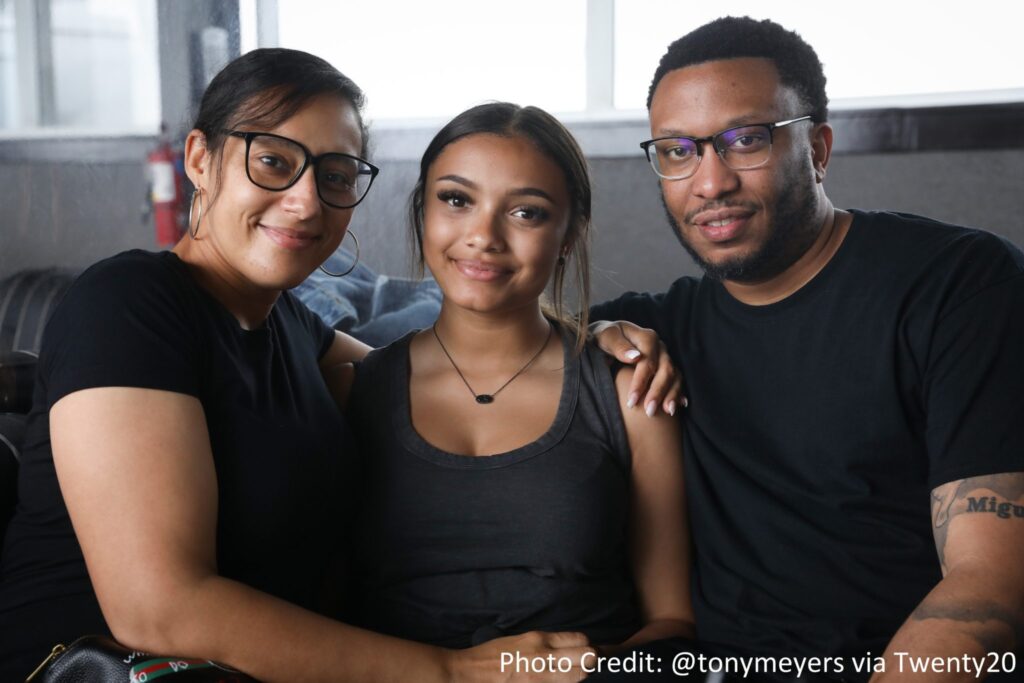
When I read Nikole Hannah-Jones’ deeply personal essay, “In Fighting for Every Black Child, Did I Betray My Own?,” I did not read it first as an education advocate. I read it as a Black father.
I felt the weight of a question that Black families have carried for generations: What are we willing to sacrifice to give our children the education they deserve?
As a dad, I have carefully navigated public school options for my children. Like every parent, I want them to attend schools where they are challenged, nurtured, protected, and allowed to succeed. I want them to be surrounded by educators who recognize their brilliance, insist on their excellence, and see their Blackness as a source of possibility, not a problem to be managed.
That should not be an extraordinary expectation. But for far too many Black families, finding such a school requires a painful series of compromises. Too often, the choice feels like tutoring or therapy.
Choose the school with greater academic opportunities, and you may later need therapy to help your child process the racism, isolation, lowered expectations, and daily indignities of being one of only a few Black students in the building. Choose the school where your child feels culturally affirmed, and you may later need tutoring to compensate for years of bad policy decisions that disenfranchise Black schools, resulting in the lack of rigorous instruction, advanced courses, new technology, or other opportunities.
Black families should not have to make that choice. And we certainly should not have to empty our savings accounts for private school tuition, move away from communities we love, or compete for a limited number of seats in selective programs simply to obtain what public education should already guarantee every child.
I want to be clear that I fully recognize the privilege in that I have options to choose from. Therapy and tutoring are both beyond the reach of many families. So is private school. So is moving to another neighborhood. So is taking time away from work to decipher enrollment systems, attend hearings, challenge placement decisions, or fight for services a child should have received in the first place.
For millions of parents, there is one choice – the neighborhood school – and they do everything they can within that constraint to make sure it sees their child’s promise.
A stubborn, harmful, and false narrative persists: Maybe Black students are not prepared for academic rigor. Maybe their families do not value education enough. Maybe predominantly Black schools struggle because something is wrong with the children, their families, or their communities. Maybe low expectations are all Black students can meet.
In New York, for instance, the state is sunsetting the Regents exam without a stronger replacement ready. This decision comes at a time when “New York’s graduation rate reached 85% in 2025,” while “only 56% of students passed the Algebra I Regents Exam.” Is the Regents exam imperfect? Absolutely. But I worry this choice may be influenced by the bias of low expectations. Low expectations would have subsumed Nikole Hannah-Jones’ daughter had the Regents exam not revealed where support was needed.
We must reject these lies, stereotypes, and biases completely. Our children are not the problem, and neither are our families. The problem is a system that has repeatedly concentrated opportunity in some communities, while rationing it in others. Black students are given fewer supports and resources and then blamed for the resulting disparities. Black students are celebrated for meeting low expectations because high expectations are considered out of reach. As Andre M. Perry, Ph.D., often says, “There’s nothing wrong with Black people that ending racism can’t solve.”
Our Black children are every bit as curious, capable, ambitious, and deserving as anyone else’s. Their potential has never been the question. The question is whether our nation will finally build an education system worthy of their dreams.
It is tempting to turn Hannah-Jones’ story into a referendum on one mother’s choices. Did she choose the right school? Did she ask her daughter to sacrifice too much? Should she have left sooner?
Those questions may generate heated television debates and social media arguments, but they allow the rest of us to evade the more important issue:
Why are Black parents forced to make these choices at all?
No individual family, regardless of its income, connections, or commitment, can compensate for a system stacked against them. We can volunteer, organize, donate, advocate, and fight like hell for our children. But we cannot personally repair an unfair funding formula, stabilize and diversify an educator workforce, prepare students to excel in advanced coursework, modernize school facilities, or reverse generations of segregation and disinvestment.
Nor should the answer be to take public dollars away from public schools and send them to private institutions that are not required to serve every student or provide the same public accountability.
Parents deserve choices, and that choice must start at an excellent neighborhood public school. Not as something you move, buy, or maneuver into, but as something that is guaranteed. Every neighborhood public school should be brimming with opportunity where families know their children will be challenged and where their children will grow.
As a father, I feel the anger and exhaustion of this moment. As an advocate, I know these conditions are neither natural nor inevitable. They are the consequences of policy choices, which means we can chart a new path forward.
EdTrust is preparing to advance A Nation of Promise, a policy agenda rooted in a simple conviction: Every student should receive an excellent education, learn to read and do math well, feel safe and celebrated, and have access to pathways that prepare them for college, careers, civic life, and lifelong success.
It’s time we change the narrative and put the promise of public education at its core. It starts with unlocking the promise by helping every student develop the skills to become capable and confident readers, writers, and mathematicians. Unlocking the promise means we refuse to accept anything less than helping every student reach their full potential, starting with literacy and math.
We must share the promise with every student by ensuring needs, talents, and aspirations are known; families have honest and accessible information about how schools are serving their children; the system responds the moment a student begins to struggle; and no one is left to fall through the cracks.
We must protect the promise because students cannot learn when they do not feel safe, supported, or seen — and schools must foster belonging, protect mental health, meet basic needs, and connect students to trusted adults who keep them engaged.
We must deliver the promise through well-prepared, well-supported, and diverse educators who recognize students’ strengths and refuse to let race, income, language, or disability determine their future, so that excellent teaching stops being a privilege attached to certain ZIP codes.
We must carry the promise into college, career, and life, through rigorous coursework, strong advising, real-world learning, and affordable pathways to purposeful, economically secure lives.
And we must fund the promise, so that a student’s ZIP code, race, or family income never predicts whether their school has excellent teachers, advanced courses, strong after-school programs, or safe and modern classrooms. Public resources must go where they’re needed most rather than diverted away from the schools that serve the majority of students.
This is not an abstract policy debate for Black families. We live with the consequences of a public education system that lacks a promise at its center. We are left having to choose between tuition payments and mortgage payments, between belonging and rigorous academics, between teachers that do not challenge them and teachers that do not believe they are as capable as their white peers, and between tutoring and therapy. We are forced to choose between the present and the future.
America made a public education promise. Policymakers and leaders have too often abandoned that promise or failed to live up to it. It is now time to guarantee that every child, regardless of race, income, background, or ZIP code, has the opportunity to develop their talents and pursue their boldest dreams.
Failure is not inevitable. False narratives are not truths. And Black students are not less than. I am pressing our elected leaders, policymakers, educators, and communities to adopt a new vision of public education and to take responsibility for delivering it.
The impossible choice is real. So is the possibility of transformation, and the promise we made to our children. It is time to make the impossible choice a relic of the past and the promise a guarantee of the present and future.
 September 23, 2026 by Robyn Jennings
 A Black student’s experience leading an affinity group/Black graduate student organization while navigating anti-DEI policies in higher education
 August 07, 2023 by Deiondria Lee-Sanders
 On two consecutive days in June, the Supreme Court delivered devastating blows to federal education equity efforts aimed at helping students of color and students from low-income backgrounds earn their…
 August 03, 2023 by Ena Walker
 In the summer of my senior year, my private school updated its dress codes and introduced a ban on the use of head wraps, except for religious purposes. This new…