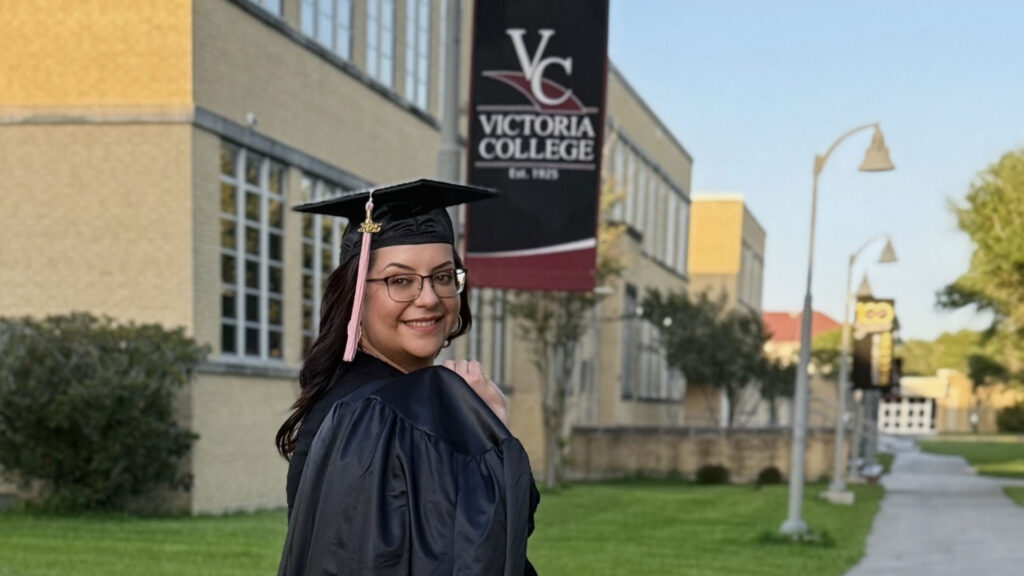
By the time I sat down for my first college class, I had already worked a 10-hour day. I was 33, had earned my GED, and was determined to build upon my education. Four years later, I’m pursuing my bachelor’s degree in communications at the University of Texas at San Antonio (UTSA). I’m also a mom, a first-generation college student, and a Pell Grant recipient. My path hasn’t been traditional, but every step has strengthened my determination to earn my degree.
I started at Victoria College, taking night classes while working during the day. It was exhausting, but I wanted to do more than earn credits. I wanted to make the most of the opportunity. I got involved on campus, worked in the advising office, and learned to ask questions, a lot of them.
One of the most influential people on my journey was Mrs. Frankie, an administrator in Victoria College’s advising office and a mentor whose advice changed my trajectory. She reminded me that even when students feel like just another number, there are people and faculty who genuinely care about their success. Although Mrs. Frankie passed away last year, her guidance continues to inspire me and the hundreds of students whose lives she touched.
Additionally, one of the best decisions I made at my community college was getting to know my advisor, Kevin. He asked where I wanted to go next, and together we mapped out how I could reach my goals, which led me to UTSA. The Key Center, our college’s version of the TRIO program, also helped me stay on track. During work-study, I saw the importance of checking in, following up, and understanding deadlines and financial aid requirements. Kevin’s support gave me confidence. Support gave me confidence.
When it came time to transfer, UTSA’s application process was straightforward. The university even made me feel welcome as an online student, sending an acceptance package and helping me get my student ID without ever stepping onto campus. I was excited to move forward.
But then came the part that still frustrates me: three of the courses I completed at Victoria College did not count toward my bachelor’s degree. Courses I needed for my associate’s degree. I paid for them. I did the work. Yet they didn’t move me closer to graduating from UTSA.
Because I worked at my community college, I knew more about the transfer process than many other students. I understood which courses might not count, but understanding a rule doesn’t make it fair. I heard from many upset students that they had used scholarship money on classes that wouldn’t transfer, money they could have used for other courses. Even now, I don’t understand why these credits don’t count.
Costs made things harder, too. I had to save for the application fee, and university courses were far more expensive than those at Victoria College. Because I couldn’t attend full time, my Pell Grant funding was reduced, which led me to take out student loans. For students managing jobs, children, and other responsibilities, every expense matters.
My transfer experience showed me both what works and what must change. I had advisors who listened, clear communication from UTSA, and a flexible online program that fit my needs. Every student deserves that kind of support. But students also deserve to know, before they register, which courses will count, how much their degree will cost, and who to contact when something goes wrong.
Community colleges and universities must coordinate degree requirements, offer clear information on transferring between institutions, explain fees in plain language, and provide ongoing advising, not just pamphlets at transfer fairs. If colleges require courses that won’t transfer, those courses should at least provide practical guidance on financial aid, transfer requirements, and navigating college.
My advice to other students is to find someone on campus you trust; a counselor, professor, or mentor and keep asking questions. Don’t give up. Success should not depend on whether a student knows the right person or has the time to visit an advising office every week.
This National Transfer Week, I want Texas colleges and universities to make a simple commitment: stop putting avoidable obstacles between students and their degrees. We are doing our part. Its time institutions do theirs.
As part of our commitment to elevating diverse perspectives, EdTrust occasionally features guest blogs. The views expressed are those of the author and do not necessarily reflect EdTrust’s views or positions.


 October 23, 2026 by Alexandra Deckelmann