

Three Generations. Three Choices. One Reason: A Good Education
From the South to Chicago, one family’s determined quest to provide an excellent education for their child
 September 24, 2026 by Ameshia Cross


From the South to Chicago, one family’s determined quest to provide an excellent education for their child
September 24, 2026 by Ameshia Cross
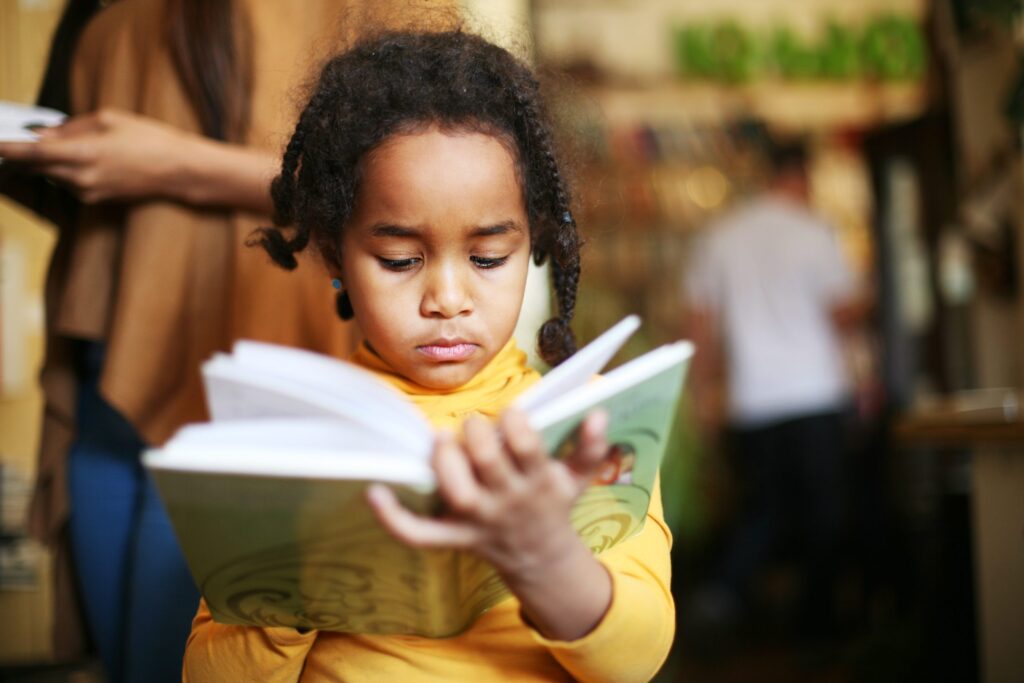
I haven’t stopped thinking about Nikole Hannah-Jones’s recent New York Times piece and the questions it raises about Black parents, public education, and the choices we make for our own children.
My grandparents attended segregated schools in Jim Crow Mississippi. My Nana only made it through sixth grade. My Granddaddy, a sharecropper, made it through ninth.
They relocated to Chicago in the 1950s, heeding the call of the Chicago Defender and countless Black churches urging Black Southerners to leave the South in search of jobs, safety from the KKK, and better opportunities. Granddaddy worked in the steel mills, and when my mom was born in the 1960s, he was determined that his only child would go further than he and my Nana ever had the opportunity to go. So, he worked two jobs to send her to private Catholic school from kindergarten through 12th grade.
He didn’t trust that Chicago Public Schools, particularly the neighborhood school available to his daughter, would give her the education he wanted for her. And to be fair, when I look back at the data on the school my mom would have attended, my Granddaddy had reason to worry.
Maybe my mom would’ve been the exception. Maybe not. He wasn’t risking it with his only child.
My mom had four kids. She couldn’t afford to send us all to private school, and she didn’t particularly want to. She hated her Catholic school experience. So, we went to public school.
By first grade, I was struggling to read. Instead of my teacher having the tools and support to teach me, she wanted to retain me.
My mother refused.
She knew that holding me back wasn’t going to fix the fact that I hadn’t been taught to read. She also knew that being held back was a key factor in my Nana only reaching the sixth grade. Getting labeled, bullied, and not getting the support necessary doesn’t help Black kids or any kid.
My mom rebuked that outcome.
So, she pulled me out.
From second through sixth grade, my mom homeschooled me. She taught me to read, write, you name it. She surrounded me with books. She took responsibility for an education she believed my school had failed to provide. When I re-entered public school, I tested above grade level, took honors and advanced placement courses, and tested into the gifted track.
My mom had an ideology. We all do. But her primary goal was ensuring that her children received a strong education. She wasn’t willing to watch me fall further behind and hope the system eventually figured out what to do with me.
She understood that far too many students never catch up. And far too often, our education system isn’t designed to give the children who need the most support the intensity of support they actually need.
By seventh grade, it was time for me to return to school.
My mom moved all of us into my Granddaddy’s one-bedroom apartment.
Seven people. One bedroom.
She did it because he lived in a zone with some of the highest-performing public schools in the state.
Those schools produced scholars, graduates of top-tier universities, business leaders and entrepreneurs. I went to high school with the children of governors and senators.
I was also the lone Black kid in about 98% of my classes.
A child can only be called “monkey” and the n-word and ridiculed for the texture of her hair for so long before the message sinks in: You don’t belong here. You never will.
The last straw in my ability to fight back and stay strong came when a group of white boys tried to hold me down and set my braids on fire. Those braids, which my mom had gone to great lengths to style and which I had worn with pride, had become another weapon used to humiliate me.
The racism and bullying had become relentless. At 14 years old, I attempted suicide.
I think about that now as an adult and as someone who has spent much of my career fighting for educational opportunity for Black children.
My mom did what America tells Black parents to do: She fought for her child.
When a school wasn’t teaching me to read, she took me out and taught me herself.
When she believed I needed something she couldn’t provide at home anymore, she found a way to get me into one of the strongest public school systems available to us.
She didn’t have the money to buy a house in that neighborhood. So, she moved seven people into a one-bedroom apartment.
She got me access to the “good schools.”
And still, she couldn’t protect me from everything waiting for me once I walked through those doors.
That’s what sits with me in this conversation.
These weren’t theoretical policy debates in our household; they were decisions about our lives.
And that’s where I struggle with so much of today’s conversation about Black parents and education.
We talk about school choice as an ideology. We talk about public education as an ideology. We talk about integration, neighborhood schools, private schools, and homeschooling through political frameworks that can become detached from what families are actually experiencing.
Meanwhile, there is a mother sitting across from a first-grade teacher being told her child should repeat the grade because she can’t read.
What is that mother supposed to do?
How long should she wait for the school to get it right?
How much of her child’s education is she supposed to sacrifice for the promise that the system might eventually improve?
And what happens when getting your child into the “good school” introduces an entirely different set of problems?
Black parents have been navigating these questions for generations because access to education in America has never been equal.
We fought for access to schools we were legally prohibited from attending. We fought for resources in schools that were deliberately starved of them. We fought to get our children into advanced classes, gifted programs and college pipelines. We moved. We paid tuition. We homeschooled. We worked second jobs. We used relatives’ addresses. We did whatever we thought might give our children a fighting chance.
And Black families are still making impossible calculations.
We know public education is a public good worth protecting. We also know what it feels like when the public system fails your child.
We know integration opened doors generations of Black children had been denied. We also know walking through those doors has not always meant our children were welcomed, protected or even seen.
We know every child deserves a great school in their own community. We also know parents cannot put their child’s childhood on hold while America figures out how to finally deliver that promise.
My Granddaddy couldn’t wait.
My mother couldn’t wait.
And when my first-grade teacher wanted to retain me rather than teach me to read, my mother decided I couldn’t wait either.
Today, I know my mom made the best decisions she knew how to make throughout my educational journey.
But, my God, Black parents are so often handed no-win situations and then expected to somehow choose correctly.
 September 24, 2026 by EdTrust
 The choices families make are personal. The conditions that force those choices are not. EdTrust examines what it will take to build a public education system that works for every student
 September 24, 2026 by Letisha Marrero
 Parents have to make tough decisions when it comes to their child’s education. Some have a choice. But many Black and Latino parents don’t. Here’s one mom’s story of sacrifice
 September 23, 2026 by Augustus Mays
 The impossible choices Black families make reveal what America must transform