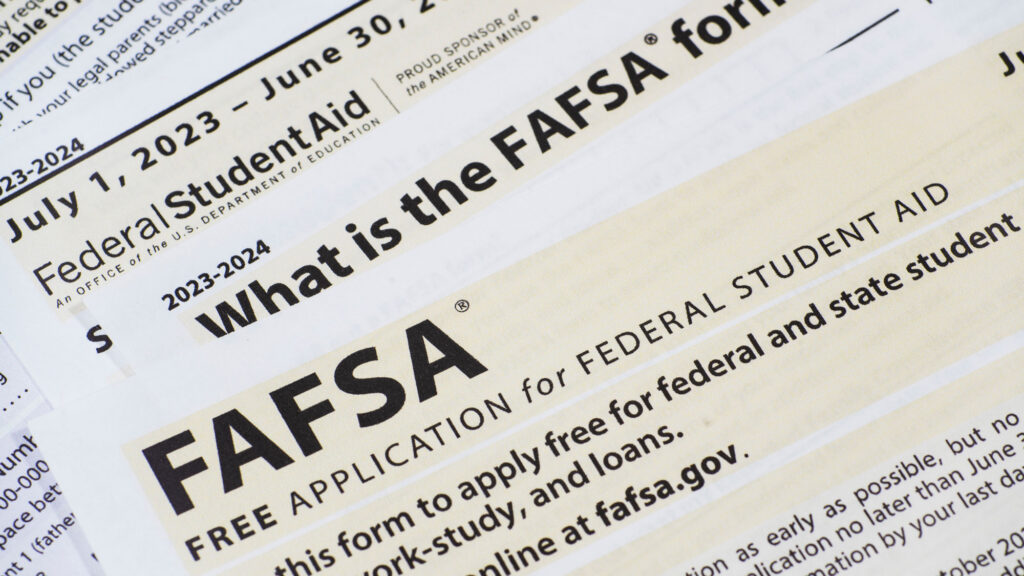
What Is the FAFSA and Why Is It Crucial for Financial Aid?
Financial aid plays an essential role in closing this affordability gap. The Free Application for Federal Student Aid (FAFSA) serves as the gateway to federal grants, work-study programs, and student loans, and it is widely used to determine eligibility for state and institutional aid. Yet, while FAFSA completions are on the rise, millions of eligible students still fail to complete the form each year due to confusion about the application process, limited access to reliable guidance, concerns about debt, and insufficient advising support in schools. As a result, billions of dollars in federal financial aid go unclaimed annually.
The Declining Purchasing Power of the Pell Grant
At the same time, federal aid has not kept pace with rising college costs. The Pell Grant, the federal government’s primary need-based grant program, has lost significant purchasing power. In 1975, the Pell Grant covered more than 75% of the total cost of attendance at a public four-year institution; today, it covers roughly one-third of those costs. Recent eligibility expansions have increased access to Pell Grants, but the Congressional Budget Office estimates that the program could face an $11.5 billion shortfall within the next two years if additional funding is not provided.
Why States Are Turning to Universal FAFSA Policies
Despite these challenges, FAFSA completion remains strongly associated with higher college enrollment and persistence rates. Recognizing this link, some states have adopted universal FAFSA completion policies, requiring or strongly encouraging high school seniors to complete the FAFSA as a condition of graduation. Fourteen states have implemented these policies, although Louisiana and New Hampshire have since repealed theirs. The goal of these policies is to increase access to financial aid and encourage more students to pursue postsecondary education.
How Four States Are Implementing Universal FAFSA Requirements
This report — the second in a series examining universal FAFSA completion policies — analyzes how these policies are being implemented in Colorado, Illinois, Indiana, and Louisiana. Drawing on interviews and focus groups with state officials, school counselors, and principals, the report identifies the key supports schools need to successfully implement FAFSA requirements and help students access financial aid.
Why Funding and Support Are Essential for FAFSA Policies
Our findings show that effective implementation is crucial. Universal FAFSA policies can expand college access, but without adequate funding and support, they risk placing additional burdens on already stretched school staff. To ensure these policies achieve their intended goals, state leaders should focus on both policy design and implementation.
Key Policy Recommendations
State legislators, education agencies, and policymakers should:
- Provide dedicated funding to support equitable implementation of universal FAFSA policies, including staffing, training, and outreach
- Establish clear opt-out waivers for students who cannot or do not need to complete the FAFSA
- Adopt complementary college-access policies that encourage postsecondary enrollment and completion
- Develop user-friendly FAFSA data dashboards to help school personnel track completion rates and target student support
- Create supportive accountability systems that emphasize improvement
With thoughtful design, adequate resources, and sustained commitment, universal FAFSA policies can help students access existing financial aid, strengthen workforce development, and expand postsecondary opportunity nationwide.

 March 16, 2026 by