


For three decades, EdTrust has been the nation’s leading voice for education equity — fiercely advocating for students of color and students from low-income backgrounds, challenging systemic injustices, and reframing the public narrative. Take a walk through our historical journey of major milestones, policy-shaping wins, expansion, and impact.

Founding of The Education Trust
Education equity visionary Kati Haycock established The Education Trust (EdTrust) to advocate for a high-quality education that prepares students of color and students from low-income backgrounds to enter and complete college. Initially housed at the American Association for Higher Education and funded with support from The Pew Charitable Trusts, EdTrust’s early work in three cities brought together K-12 systems, colleges, and community-based organizations to advance K-16 reforms.
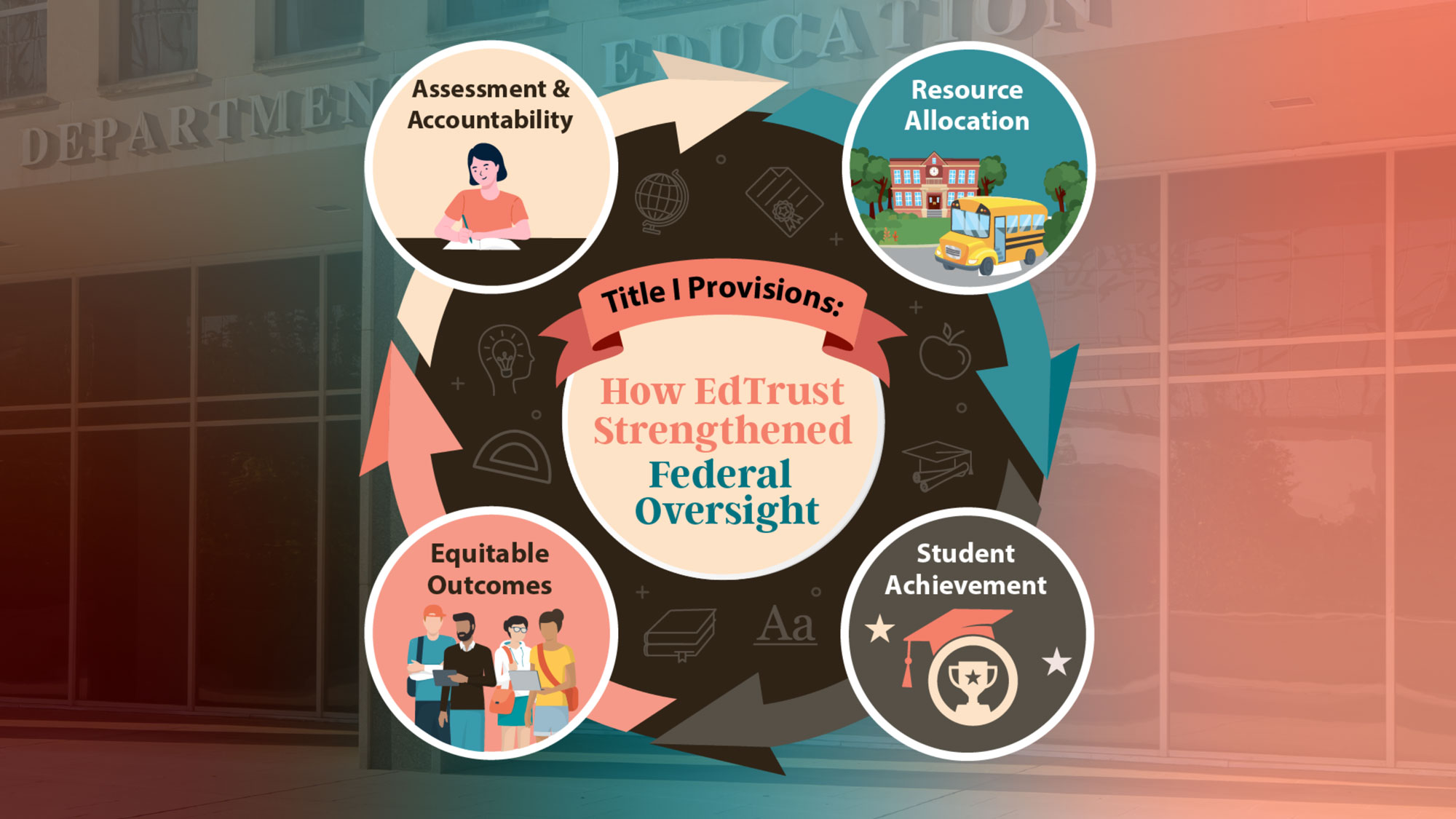
Expanded Focus, Title I Win
EdTrust expanded its work to include federal policy advocacy. In 1994, the organization played a key role in securing a major overhaul of Title I provisions, strengthening federal oversight and accountability for the academic outcomes of students from traditionally underserved backgrounds.

Sounding the Alarm on Widening Gaps in Student Performance
EdTrust was incorporated as an independent nonprofit organization —now commemorated as the organization’s anniversary year.
During this period, EdTrust expanded its use of research and data to highlight disparities between the academic performance of students of color and their white peers. Its pioneering use of state and national data earned coverage in Education Week and The New York Times, helping reset the national education equity narrative.
In its first strategic plan, EdTrust’s leadership advanced an audacious goal: to sound the alarm that students of color were disproportionately starting out—and remaining—further behind their white peers. The plan emphasized that achieving educational equity would require intentional funding, focus, and supports, solidifying EdTrust’s role as a leading truth-teller and “Paul Revere” for education equity.

Reframing the Education Debate
EdTrust published Good Teaching Matters challenging deficit-based narratives that suggested poverty doomed certain students to failure regardless of instructional quality. By lifting up success stories, the report countered these assumptions and argued that effective teaching matters deeply. Although initially met with skepticism, the report’s influence grew over time. In 2011, bestselling author Steven Brill described it as a work that “began a flood… that would reframe the education debate.”

Making the Case for Rigorous Curriculum
In collaboration with the National Association of System Heads, EdTrust published Ticket to Nowhere, a seminal report arguing that high school graduation requirements in many states were insufficient to prepare students for college or the workforce. Supported by analysis of high school exit exams and college-entry assessments, the report later became foundational to the development of the Common Core State Standards.

Leading the Push for Teacher Preparation Accountability
EdTrust continued emphasizing the critical role teachers play in helping students achieve their full potential. After publishing Not Good Enough, which exposed the lack of rigor in teacher licensure exams, EdTrust released Honor in the Boxcar, a collection of essays and action steps aimed at strengthening teacher preparation—particularly for schools serving the highest-need students. This work contributed to the first-ever accountability provisions for teacher preparation programs in the Higher Education Act.

Truth-Telling Leads to No Child Left Behind
The reauthorization of the Elementary and Secondary Education Act—known as No Child Left Behind—was shaped in significant part by EdTrust’s efforts to educate the public and policymakers about achievement gaps among student groups. EdTrust convened a bipartisan group of legislators and business leaders to advance the legislation. As a result, schools were required to measure performance for all student groups and were held accountable based on outcomes for their lowest-performing students.

EdTrust-West is Founded
That same year, EdTrust opened its first state office in California. EdTrust-West developed a broad portfolio addressing the state’s complex education challenges, extending EdTrust’s impact beyond the national level. Over the years, EdTrust-West has reaffirmed the power of our organization’s unique value, playing a pivotal role in crucial statewide policy changes and supporting equity-driven practices across California.
Highlighting Success Stories
As part of its ongoing mission, EdTrust launched the inaugural Dispelling the Myth awards to recognize schools where educators effectively taught students of color and students from low-income backgrounds to high levels of achievement. In subsequent years, award-winning educators and their strategies received national recognition, including from the U.S. Department of Education.

Uncovering Dismal College Completion Rates
EdTrust launched College Results, the first free, online tool providing graduation-rate data for every four-year college and university in the country. The interactive website revealed alarmingly low completion rates for students of color and students from low-income backgrounds, shedding new light on how poorly higher education institutions were serving these students.

Funding Gaps: Exposing Inequities in School Finance
EdTrust published its first Funding Gaps report, a groundbreaking analysis examining disparities in school funding across states and districts. The report revealed that students from low-income backgrounds and students of color were disproportionately educated in underfunded school systems, elevating school finance equity as a national civil rights issue and shaping policy debates for years to come.

Challenging Higher Education Leaders
Working with the National Association of System Heads, EdTrust launched Access to Success, an ambitious initiative to increase college enrollment and completion for Pell-eligible students and underrepresented students of color. The effort challenged public higher education system leaders serving more than three million students to increase graduation rates and ensure outcomes more closely reflected the diversity of their states’ high school graduates.

Expanding Mission and Footprint
While continuing its deep commitment to K-12 equity, EdTrust significantly expanded its higher education research and policy work, formalizing it as a distinct division within the organization. This growth reflected a sharpened focus on college access, affordability, and completion for students of color and students from low-income backgrounds.
That same year, in partnership with Michigan philanthropic leaders, EdTrust founded EdTrust-Midwest—marking a major expansion of its state-based advocacy model to confront persistent opportunity gaps and advance equity across the state.
Mobilizing to Save Pell
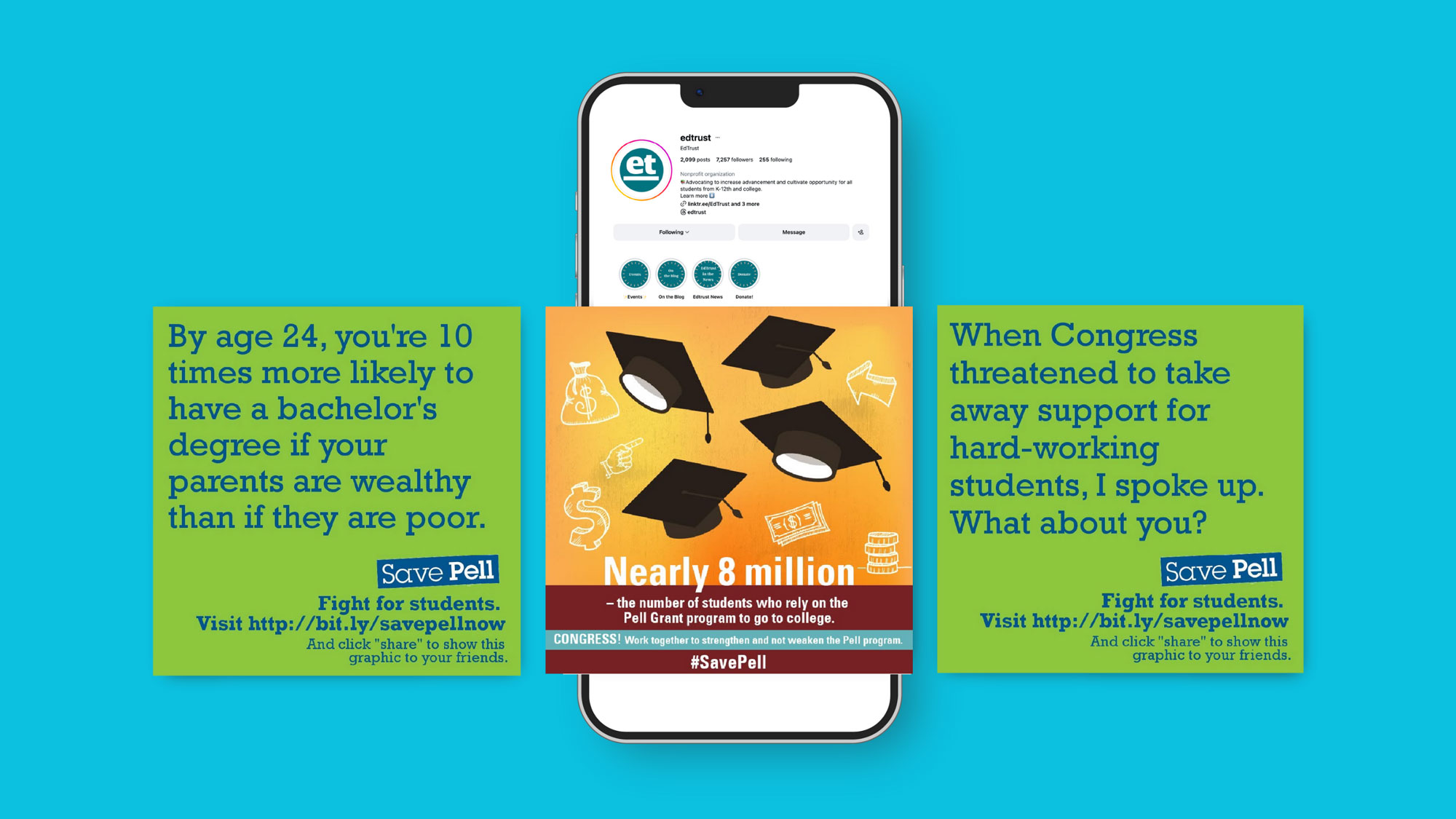
EdTrust achieved a major victory through the Save Pell campaign, which successfully restored funding to the Pell Grant program during a period of severe budget cuts. Mobilizing hundreds of partners, EdTrust expanded its digital advocacy efforts, including the Faces of Pell campaign, generating more than 130,000 messages to policymakers. A coordinated day of action prompted engagement from over one million Twitter users and more than 140 organizations. The resulting Budget Control Act of 2011 included $17 billion to close Pell’s funding shortfall—while most other programs faced cuts.

Going Digital
EdTrust expanded its reach by using digital storytelling to make data more accessible and actionable. Through videos, infographics, blogs, and interactive tools, EdTrust brought research to life for policymakers, advocates, and the public.
That year, EdTrust released Uneven at the Start, an analysis examining state progress in improving academic outcomes for students of color and students from low-income backgrounds, revealing persistent disparities and uneven reform efforts across states. To complement the report, EdTrust launched the State Academic Performance and Improvement Tool, an interactive resource that allowed users to explore state-level data, compare progress over time, and pinpoint where equity-focused improvement was—and was not—occurring.
Resetting the National Focus on Education Equity
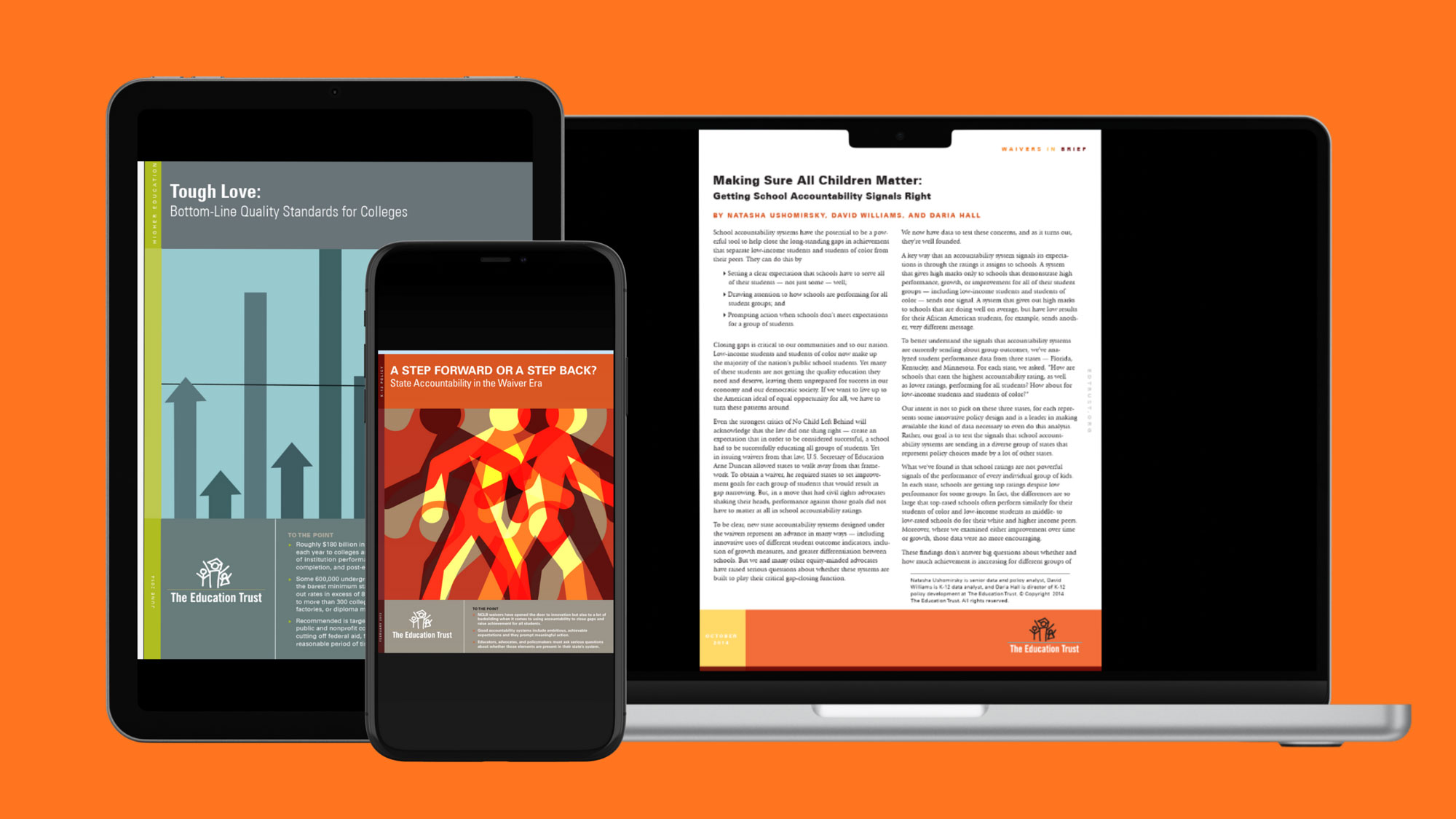
That same year, EdTrust published Tough Love: Bottom-Line Quality Standards for Colleges, calling for stronger federal accountability in higher education. The report argued that institutions receiving taxpayer dollars should meet minimum standards for access, completion, and student success — particularly for low-income students — placing EdTrust firmly on record for demanding accountability and protections for students and taxpayers.

Leading a Bipartisan Coalition to Advance Equity in ESEA
As Congress reauthorized the Elementary and Secondary Education Act, EdTrust convened and led a broad bipartisan coalition to advance a strong equity agenda in what became the Every Student Succeeds Act (ESSA). Through coordinated advocacy, EdTrust helped secure critical equity provisions, including standards and assessments, meaningful accountability, transparent reporting, fair funding, and equitable access to effective educators.
Expanding Footprint & Mobilizing State Advocates
EdTrust opened its third state office, EdTrust-New York, focused on leveraging ESSA implementation opportunities. Working with civil rights, education, parent, business, and civic organizations, EdTrust-NY advocated for a strong accountability system addressing underperformance for any student group. Meanwhile, EdTrust-Midwest’s research informed congressional hearings during the consideration of Betsy DeVos for U.S. Secretary of Education, drawing global media attention.
Mobilizing States to Advance Equity Under ESSA
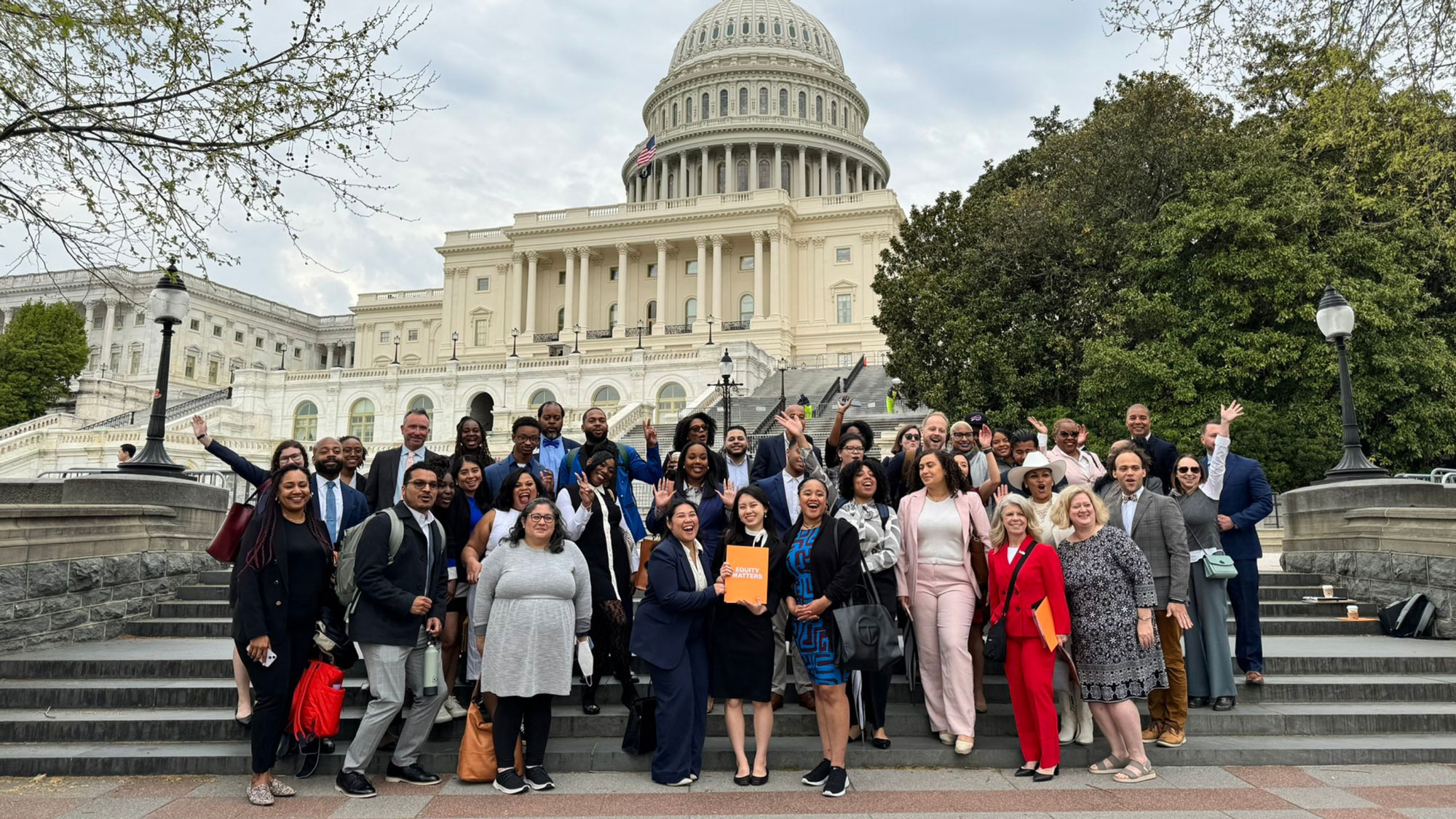
In the wake of ESSA’s passage, EdTrust launched the Students Can’t Wait Project to help states seize a once-in-a-generation opportunity to redesign assessment, accountability, and school improvement systems. Through its now-signature Equity Advocacy Bootcamps, EdTrust convened and trained hundreds of advocates from 22 states, equipping them with a clear understanding of the policy window ESSA created and the levers available to advance equity. These bootcamps empowered advocates to build diverse, equity-focused coalitions and to push state leaders to make implementation decisions that centered students of color and students from low-income backgrounds.

Leadership Transition
After 25 years at the helm, EdTrust founder and CEO Kati Haycock retired. EdTrust’s board of directors unanimously selected John B. King Jr., who served as U.S. Secretary of Education under President Barack Obama, as the next president and CEO. Kati left the organization stronger than ever — with more staff, resources, and purpose to fulfill its mission of advancing education equity for students of color and students from low-income backgrounds.
Also, Ed Trust-Midwest’s analyses on Michigan’s lack of oversight and accountability for its public charter school sector and the consequences for Black students and students from low-income backgrounds drew national attention, including The New York Times.

Elevating College Equity
In 2017, EdTrust released two major higher education research reports—A Look at Latino Student Success and A Look at Black Student Success—that provided rigorous, data-driven insights into graduation outcomes and completion gaps for Latino and Black college students, highlighting institutional patterns that contribute to inequitable outcomes. These reports identified top- and bottom-performing institutions and underscored that what colleges do matters for student success, helping focus national attention on closing racial and ethnic completion gaps.
At the same time, EdTrust’s higher education practice deepened its impact through the OASIS (Optimizing Academic Success and Institutional Strategy) initiative, which brought together a national network of campuses serving large populations of students of color. Through OASIS, EdTrust supported colleges in implementing high-impact practices — such as data-informed advising, evidence-based retention strategies, and collaborative institutional learning — to improve graduation rates for historically underserved students and help close achievement gaps on and across campuses.
Expanding in the States & Launching Equity-Centered State Higher Education Policy
After convening and supporting advocates from across the country through its Equity Advocacy Bootcamps, EdTrust identified 10 states for deeper, sustained engagement based on the strength of their coalitions and their ongoing ESSA-related advocacy. In 2018, EdTrust hired its first state director in Louisiana and launched the Massachusetts Education Equity Partnership, a diverse coalition advancing equity-focused policy solutions to address persistent gaps in the state’s education system. That same year, EdTrust helped establish the Maryland Alliance for Racial Equity in Education (MAREE), which engaged the Kirwan Commission on Innovation and Excellence in Education—the body charged with developing policy recommendations that ultimately informed The Blueprint for Maryland’s Future. In the years that followed, EdTrust expanded its state presence, placing staff on the ground in Massachusetts, Texas, Washington, and Tennessee.
EdTrust published A Promise Fulfilled: A Framework for Equitable Free College Programs, its first comprehensive analysis of statewide “free college” or college promise initiatives. The report offered policymakers and advocates an equity-driven framework for evaluating how these programs are designed. By reviewing 15 existing and 16 proposed statewide programs and outlining clear equity criteria, A Promise Fulfilled helped define what truly equitable free college policy should look like and marked a major expansion of EdTrust’s state-level higher education policy work.

Bipartisan Higher Education Reform, Pandemic Relief & Resource Equity
EdTrust worked alongside dozens of organizations across the ideological spectrum to overturn the federal ban on Pell Grants for students who are incarcerated, correcting a decades-long discriminatory policy. In the same bipartisan legislation, EdTrust successfully advocated for the simplification and improvement of the Free Application for Federal Student Aid (FAFSA), making it easier for more students from low-income backgrounds to access Pell Grants and federal financial aid.
Amid the COVID-19 pandemic, EdTrust-Midwest and coalition partners led efforts to ensure nearly 800,000 Michigan students received critical food assistance when school meals were disrupted, creating a national model for effective distribution of pandemic food aid for historically underserved students.
That same year, EdTrust partnered with Education Resource Strategies to launch the Alliance for Resource Equity (ARE), expanding the field’s focus beyond funding levels to how resources are allocated and used — and centering the dimensions of resource equity that most directly shape students’ experiences. This initiative was launched by a joint op-ed in The 74.

Education Equity Amid a Pandemic & The Justice Fellowship
As schools faced challenges that were exacerbated by the COVID-19 pandemic, EdTrust worked to ensure that the American Rescue Plan’s unprecedented $190 billion funding had set-asides for academic recovery. This included a first-of-its-kind “maintenance-of-equity” provision that prevented disproportionate budget cuts — seen in prior economic downturns — in districts and schools educating the highest amounts of students from low-income backgrounds and students of color.
Also in 2021, EdTrust launched the inaugural Justice Fellows Policy Program to elevate the voices of justice-impacted students systemically denied educational opportunities.

State School Funding Reform & Increasing Financial Aid
EdTrust-Tennessee played a central role in advancing the Tennessee Investment in Student Achievement (TISA), the state’s new school funding formula. As the legislation moved through the General Assembly, EdTrust-Tennessee equipped advocates to engage effectively by developing a TISA evaluation tool, hosting a statewide School Funding Bootcamp, and coordinating coalition sign-on efforts. Through the Tennessee Alliance for Equity in Education, EdTrust-Tennessee helped secure public support for TISA from more than 40 organizations, contributing to the bill’s successful passage.
Using research, policy expertise, and a broad-reaching communications strategy, EdTrust-West’s All in for Financial Aid campaign secured a huge win for California’s students of color and students from low-income backgrounds. The passage of Assembly Bill 469 required schools to help all students complete the FAFSA before graduating from high school. Today, more than 43,000 additional students have submitted their FAFSA, paving the way for more students of color to attend college in the state.

Leadership, State Growth & Defending the EdTrust Mission
Denise Forte was named President & CEO of EdTrust. Following a distinguished career of leadership and public service on Capitol Hill, at the U.S. Department of Education, and in the nonprofit sector, Denise had previously served as interim president and CEO while John B. King Jr. took a leave of absence before going on to lead the State University of New York system. Upon assuming the permanent role, Denise continued EdTrust’s legacy of fierce advocacy, calling for access to the high-quality education all students deserve. Amid growing national attacks on public education and inclusive curriculum, EdTrust launched the Can’t Be Erased campaign to defend students’ access to books, accurate history, and inclusive school environments. The campaign received national recognition, earning an Anthem Award in the Community Voices category for its impact.
At the federal level, EdTrust helped shape a major proposal to expand access to advanced coursework. EdTrust informed the development of the Advanced Coursework Equity Act, a federal proposal to invest $800 million in expanding access to Advanced Placement, dual enrollment, and other advanced learning opportunities for students of color and students from low-income backgrounds. The legislation was directly informed by EdTrust’s Inequities in Advanced Coursework report, which documented how Black and Latino students are systematically denied access to advanced coursework despite demonstrated readiness and interest.

State Growth & Defending the EdTrust Mission
EdTrust expanded its footprint in the South. After three years of advocacy, EdTrust transitioned its Tennessee state work into its fourth state office. EdTrust-Tennessee aims to strengthen the state’s public education system by advancing policies, fair funding, and practices that better serve students of color and students from low-income backgrounds, from pre-K through college.
EdTrust-Midwest helped secure a historic school funding victory in Michigan. Michigan became one of the nation’s leading states to address the concentration of poverty through a new weighted school funding formula known as the Opportunity Index. EdTrust-Midwest, in partnership with the Michigan Partnership for Equity and Opportunity (MPEO), played a central role in advancing and securing this legislative win.
Reimagining EdTrust’s Brand & Fortifying Our National Impact
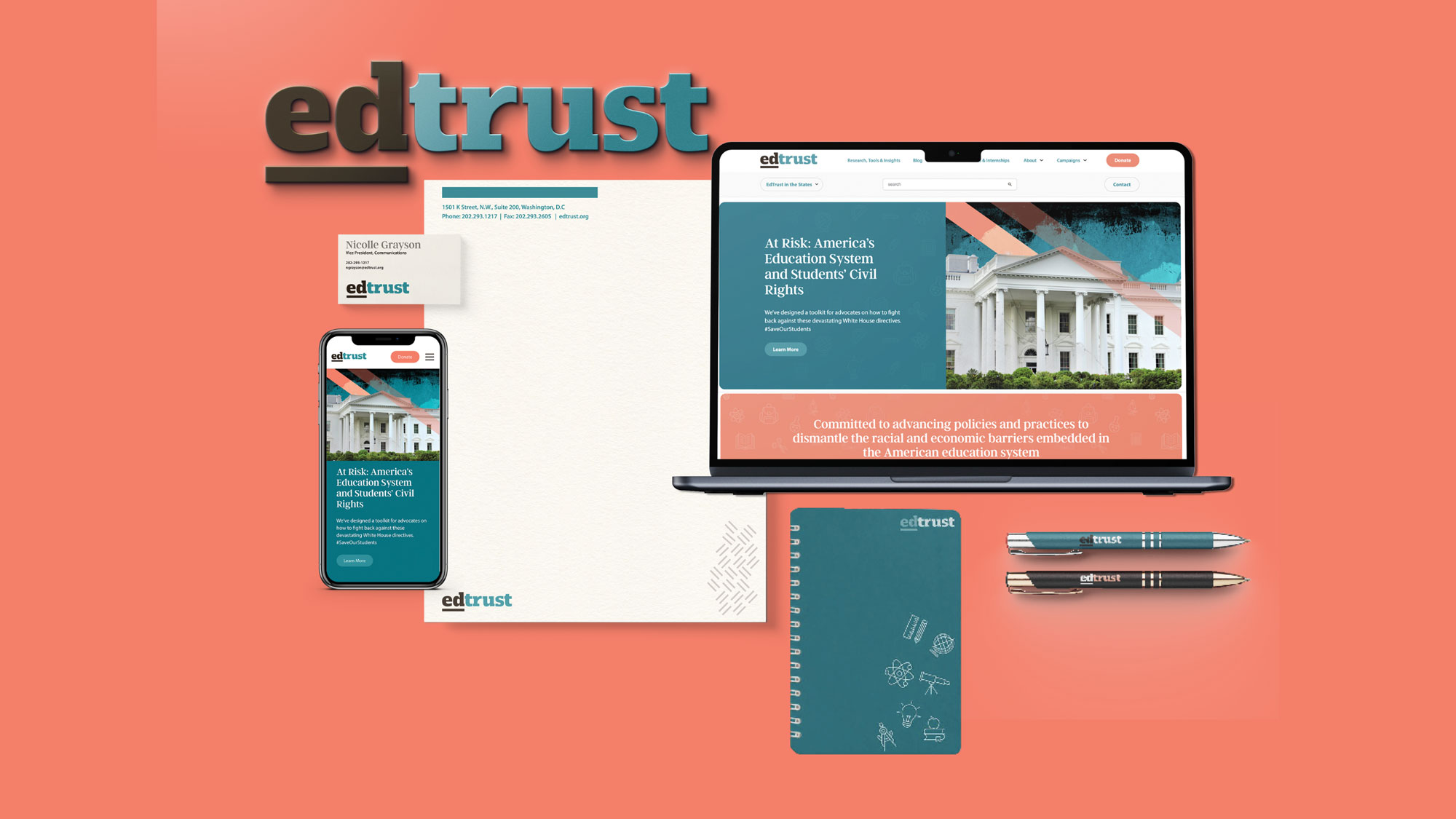
EdTrust revealed a massive org-wide rebrand, unifying all offices under a bold, modern visual identity that reflects our unwavering commitment to education equity. Alongside the rebrand, EdTrust launched the #EduReimagined campaign, inviting the nation to envision what is possible when every student has the opportunity to excel.

Tackling Chronic Absenteeism Head On
Partnering with Attendance Works and Nat Malkus from AEI, EdTrust issued a national challenge urging states to reduce chronic absenteeism by 50% over five years — a call answered by 14 states, representing over 9 million students. We also helped secure the third straight year of federal funding for the Postsecondary Student Success Grants program, which supports evidenced-based student success programs at colleges across the country.

Securing Wins in the States
Meanwhile, EdTrust-Midwest and partners secured significant funding victories during a tight budget cycle, adding $83 million to the Opportunity Index and bringing total investments for students from low-income backgrounds to over $1B. After six years of advocacy, ETM and partners also secured passage of Michigan’s Reading for All law, which helps students with dyslexia and the teachers who support them. EdTrust-West secured more than $85 million for math and science professional development for educators. EdTrust-New York successfully advocated expanding access to child-care subsidies, and EdTrust-Tennessee launched a regional strategy to strengthen school funding across the South. EdTrust in Texas helped secure a major overhaul of community college funding. In Kentucky, we worked with the Prichard Committee for Academic Excellence to defeat Amendment 2, stopping vouchers from taking hold in the state. And shaped by testimony, research, and coalition-organizing by EdTrust in MA, the state legislature passed the landmark Educator Diversity Act (EDA) to recruit and retain diverse educators.

Defending Public Education Amid Historic National Threats
Amid unprecedented attacks on public education, diversity, equity, and inclusion, and efforts to dismantle the U.S. Department of Education, EdTrust emerged as a trusted and relied-upon voice for federal policymakers and the media. Through timely analysis and public engagement with our Great American Heist campaign, EdTrust helped inform the nation about what’s at stake — and how to push back. Alongside partners, EdTrust played a role in reversing the Trump administration’s illegal impoundment of more than $6 billion in funding for after-school programs, English learners, migrant students, and teacher preparation and training.
At the state level, EdTrust and its partners successfully defended students’ rights and public education investments. Through policy analysis, op-eds, legislative testimony, and statewide partner mobilization, EdTrust-Tennessee helped defeat three bills that would have undermined Plyler v. Doe, the landmark Supreme Court decision guaranteeing undocumented students the constitutional right to attend public school. In Louisiana, EdTrust helped stop HB 685, legislation that would have banned DEI programs in higher education and state agencies; after passing the House, the bill stalled in the Senate due to overwhelming public opposition, leadership from the Legislative Black Caucus, and sustained coalition-based organizing. Meanwhile, EdTrust-Midwest and its partners secured significant public school funding wins, including 25% increases for students from low-income backgrounds and for English learners through Michigan’s Opportunity Index.

Harnessing the Power of Storytelling
EdTrust launched an ambitious multimedia storytelling platform called The Black Principals Project. The interactive website spans the 70-year history following Brown v. Board, starting with an interview with a renown academic and historian about the untold story of how 100,000 Black educators lost their jobs as a result of the landmark decision. Fast forward to the present, as we traveled around the country to film seven of today’s Black principals to hear their stories of successes and challenges as they shape the next generation of young Americans.

Looking to the Future
As EdTrust moves into its third decade of advocacy, policy, and research, we are prepared to reimagine education so that every student — regardless of their race, ethnicity, background, or income — can excel.