I was released from prison at 23 years old. Three months later, I started college, and not long after that, my kids’ mom went to prison. So, I was a first-generation college student, fresh out, suddenly raising a three-year-old son and five-year-old daughter on my own.
My college education did not erase my record, but it gave me something to fight back with. It gave me knowledge, credentials, relationships, options, and a way to create opportunities that the system had tried to close off. It also meant my kids had a positive example right in front of them. They did not just hear me talk about changing my life. They got to watch the grind. They were part of the journey. They got to celebrate the achievements.
There was another layer to all this: My daughter was not biologically mine. I had been raising her as my own, though, and when her mom went to prison, there was never a question in my mind about whether I was going to keep raising her. She had a relationship with her biological father, and one of my responsibilities was making sure she got to spend time with him every other weekend. At that time, I wasn’t thinking about technical definitions of who belonged to who. Those were my kids, and I had to take care of them.
Before their mom went to prison, she gave me power of attorney so I could handle everything for the kids. Switching daycares, switching schools, switching benefits over to my name, signing paperwork, making decisions, whatever needed to be done. I still cannot remember how I figured out how to navigate everything. Nobody had prepared me for any of it. I just figured it out because I had no choice.
That was a huge shift from prison. For just under two years, I had very minimal responsibilities. I did not have to worry about bills, groceries, clothes, transportation, daycare, dinner, or whether two little people had everything they needed. Then I came home, and almost immediately every decision mattered.
My College Experience as a Student-Parent
My first two quarters of college were probably the most difficult. My routine was getting the kids up, getting them ready, dropping them off at daycare, and making it to campus in time for early morning classes. Because I was receiving Temporary Assistance for Needy Families (TANF, about $270/month), I also had mandatory job search activities and community service hours at a thrift store. TANF, food stamps, and financial aid was all I had to rely on financially.
Some days, I also had to fit in a trip to the welfare office to turn in paperwork, so I could stay eligible for benefits. Then I had to hurry up, get something groceries for dinner, and make it to the daycare before I was late, which was unacceptable.
That was the problem: Everything had a deadline, and none of those deadlines cared about the other ones. Class started when class started. The welfare office closed when it closed. I had to fulfill my community service hours. My job search activities had to get done. The daycare had a hard pickup time. The kids still had to eat. Once I got home, I had to cook dinner, feed them, get them ready for bed, do my reading and homework, hoping to have a little time to relax.
I was also on probation. I had to call a phone number every single day. Sometimes, I would forget, which created another stressful situation. Probation officers would also pop up at my house wearing bulletproof vests and carrying guns in front of my kids. They knew I had been to prison and that their mom was in prison. I cannot remember them acting scared, but I have thought about what that must have looked like to them.
This was my college experience. I was not the student joining clubs, hanging around campus, going to events, or doing all the things colleges like to call engagement. There were no special acknowledgement or awards. I came to class, handled my business, and left, because I had kids waiting for me and a life that did not stop because class ended. If somebody had been judging my commitment by how visible I was on campus, they would have completely misunderstood me. I just did not have the luxury of building my whole life around being a college student.
Their mom came home from prison in six months, just a couple of weeks before giving birth to kid number three. A new baby didn’t make things easier, but I was so happy her back to help. The stressful daycare runs stopped, but responsibilities like cooking dinner and getting the kids ready for bed were not permanently gone, especially once their mom started working. But there is a big difference between having shared responsibility and doing it alone.
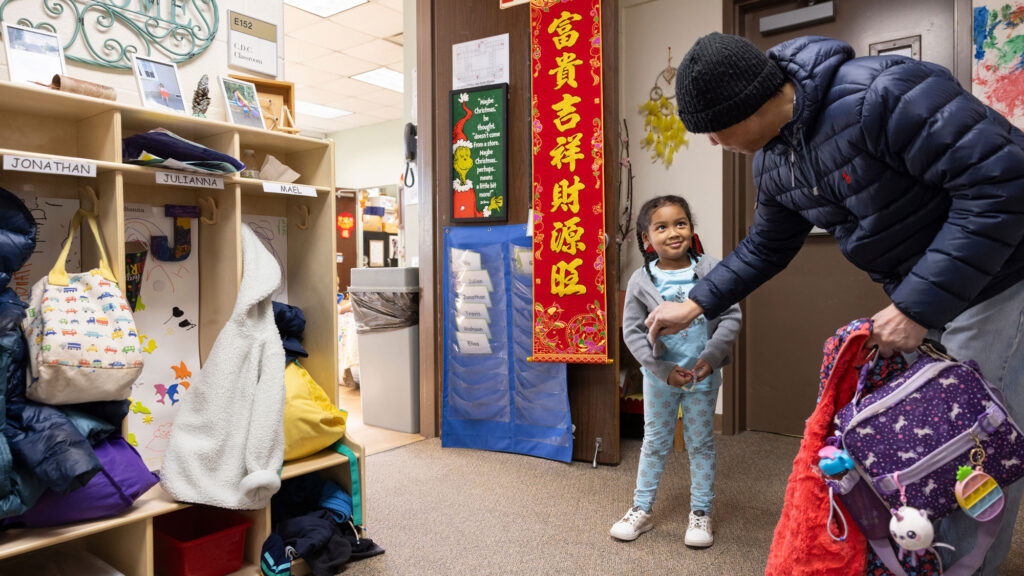
I also made it a point to volunteer in each of my kids’ classrooms and chaperone field trips. Of course, when the background check was first run, I was denied. So, I appealed the decision. Every time that happened, I fought for the opportunity to be there, and I was eventually allowed to participate. Being active and present was one of the most important things in the world to me. Incarceration had already taken time away from my kids. I was not going to allow a background check to take away more without a fight.
My Kids are my Motivation
Whenever somebody asks me what the catalyst was for me turning my life around and choosing education, I always point to my kids. Without them, it would have been much easier to go back to my old ways. They gave me purpose and a reason to live my life in a way that made their lives better instead of worse. I wanted my kids to experience stability that I never had. I had spent too much time without communication with my own father, and I wanted to be an everyday, positive presence in their lives. Somebody they could look up to and be proud to have as their father. I wanted to break cycles of poverty and incarceration. Perfection was never my reality, but those things became a strong motivating force for me.
I also knew I was responsible for creating a meaningful life for my family. I kept pushing with my education so I could create a future that, at the time, I was not even fully aware existed. My kids gave me all the motivation I needed to grind it out for the long haul, because I was trying to create sustainable social and economic mobility, not just survive from one month to the next.
Earning my degrees meant something different to me because of what the system had tried to do to me. I left the legal system with 30 felony convictions. In the state of Washington, a person was already maxxed out on the sentencing grid at nine convictions. They refused to drop a single charge as part of my plea agreement. The prosecutor’s only concession was agreeing not to charge me with leading organized crime. Knowing what I know now, if they could have charged me, they would have.
The system wanted to destroy me. They wanted the results of my background check to follow me into every opportunity I tried to access after prison. They wanted employers, schools, volunteer programs, housing providers, and anybody else who looked me up to see 30 felony convictions before they saw anything else about me. The sentence was not just the time I served. The record was supposed to keep me down long after I came home.
I refused to accept that.
My college education did not erase my record, but it gave me something to fight back with. It gave me knowledge, credentials, relationships, options, and a way to create opportunities that the system had tried to close off. It also meant my kids had a positive example right in front of them. They did not just hear me talk about changing my life. They got to watch the grind. They were part of the journey. They got to celebrate the achievements.
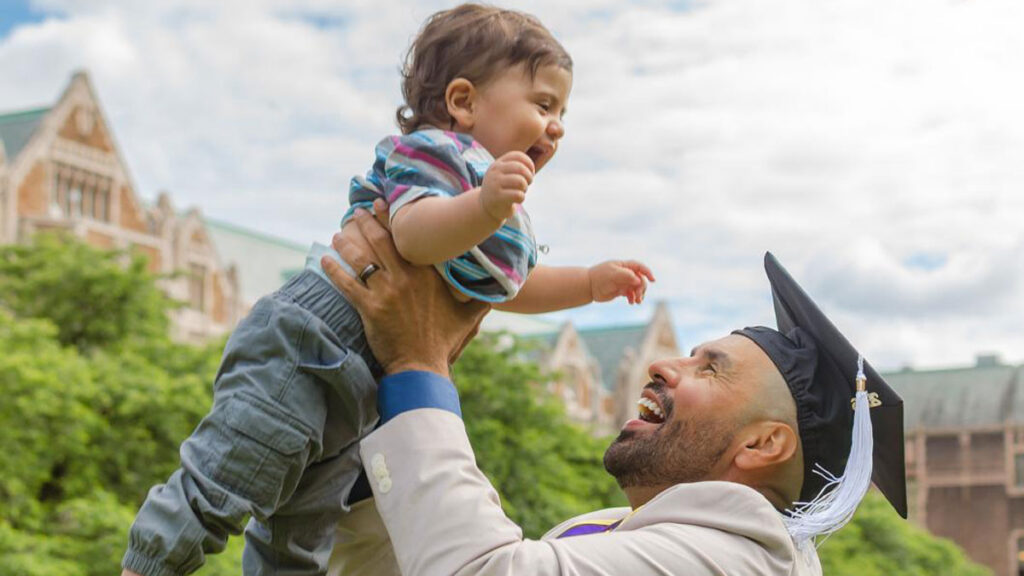
My kids watched me walk across the graduation stage three different times. I was a first-generation college graduate. They will not be.
That means a lot to me because I know what it is like to grow up without college feeling normal or expected. My kids got to see higher education up close. They saw the homework. They saw the stress. They saw the persistence. They saw the payoff. Even if college is difficult for them one day, it will not be foreign to them.
Advice for Student-Parents & Academic Leaders
To student-parents who feel overwhelmed, I would advise you to be careful who you take advice from. You have to remain the expert on your own life. Nobody has as much information about you as you do. You know what drives you. You know your responsibilities. You know what you are capable of, even when you experience doubt.
One the other hand, other people may know more than you about school, careers, money, or whatever specific thing you are trying to figure out. Listen to them. Learn from them. Ask for help. But do not let somebody else decide what is possible for you. They do not have your life. They do not know everything you are carrying.
I also think student-parents have to stop confusing doing their best with being perfect. Those are not the same thing. Hard times are okay to experience. Sometimes, you are going to be tired. Sometimes, you are going to feel overwhelmed. Sometimes, something is going to fall through the cracks. What matters is how you respond. Live your life in a way that you can look back without regret and remember that your kids are watching how you handle all of it.
Academic leaders need to understand that student-parents often carry responsibilities that are completely invisible on campus. A student who leaves immediately after class may not be disengaged — their kid’s daycare may be closing in 30 minutes. A student who cannot attend an evening event may not lack commitment — they just may not have childcare. A student who turns down an unpaid internship may simply not be able to afford to work for free.
That’s why every campus should have dedicated resources and space for student-parents. A formerly incarcerated friend and colleague of mine started a registered student organization for parents. Every campus should have something that intentional. Campus activities and programs should also automatically consider what barriers parents may face and what accommodations might make participation possible. That could mean a small childcare stipend, a virtual option, flexible scheduling, or another way to access the same opportunity.
Supporting student-parents is not about lowering expectations. It is about understanding what people are actually navigating while trying to meet them where they are at.
When I was in college, I did what I had to do and went home. But my education was never separate from what was happening at home. My kids were one of the biggest reasons I was in college in the first place. I am trying to build a life that will give them opportunities I never had, and they get to watch me build it.
Omari Amili is a 2026 Justice Fellow
Photo by Allison Shelley/Complete College Photo Library


 September 25, 2026 by Omari Amili