

Work-Study Didn’t Just Pay My Tuition. It Helped Rewrite My Future
Federal Work-Study is more than financial aid. It’s an investment in college students’ futures by giving them real work experience
 August 24, 2026 by Jovanda Irving


Federal Work-Study is more than financial aid. It’s an investment in college students’ futures by giving them real work experience
August 24, 2026 by Jovanda Irving
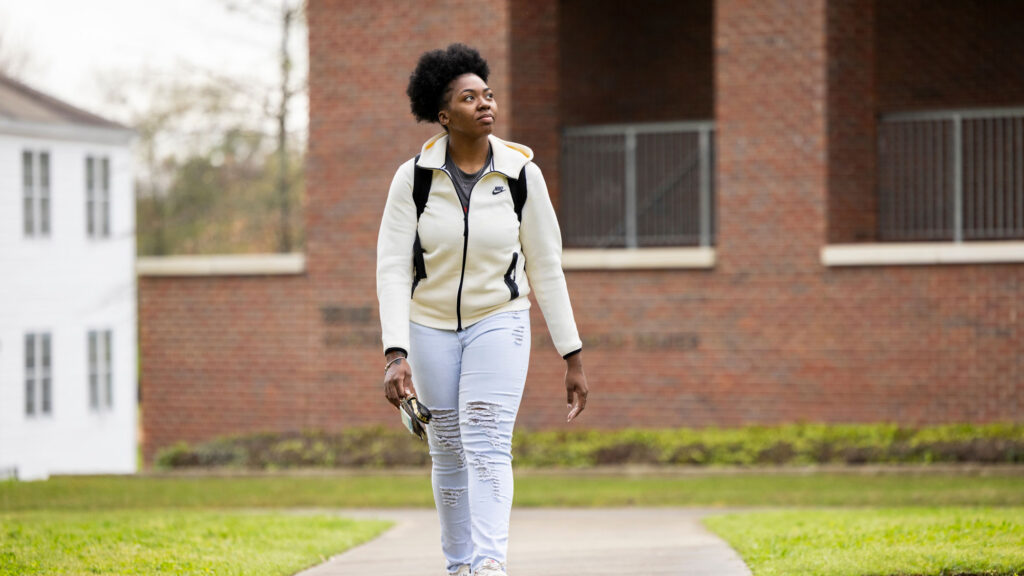
When people talk about Federal Work-Study, the conversation usually begins and ends with money. It’s described as a way for students with financial need to earn a paycheck while attending college. That’s true—but it misses the program’s greatest value.
For me, Federal Work-Study wasn’t financial aid.
It was a second chance.
I am a formerly incarcerated woman. Before returning to college, I had spent 14 years in prison. When I enrolled at Life University, I carried more than textbooks onto campus. I carried the weight of a criminal record that I knew many employers would see before they ever saw me. Then something remarkable happened. I wasn’t just given a campus job. I was given the opportunity to become known. I wasn’t thrown into some warehouse where the manager wouldn’t know my name. I was given a chance to enter into corporate-level entry work.
For two years, I worked in the Human Resources department as a Federal Work-Study student. Every day, I reported to work like any other employee. I handled confidential information. I assisted with onboarding, employee services, hiring processes, and administrative responsibilities that required professionalism and trust. My supervisors didn’t know me through a background report. They knew me through my work ethic. They watched how I treated people, how I handled responsibility, how I solved problems, and how I continued to grow.
Those observations became something far more valuable than a paycheck. They became credibility.
Today, I serve as a case manager at Zaban Paradies Center in Atlanta, helping individuals and families experiencing homelessness navigate crises and rebuild stability while operating my own business that trains professional organizations on servicing previously incarcerated people. Like many organizations serving vulnerable populations, hiring decisions are made carefully. My past could have been the first thing people noticed. Instead, people who had worked beside me in Human Resources spoke on my behalf. They didn’t recommend me because they felt sorry for me. They recommended me because they had already seen me succeed.
That distinction matters.
In today’s political climate, higher education programs — including Federal Work-Study — are often discussed primarily in terms of budgets, administrative reform, or government spending. At the same time, the federal government is reshaping higher education policy and restructuring student aid programs, creating uncertainty about how students will access educational and workforce opportunities in the years ahead. While Federal Work-Study remains funded, its future exists within a broader conversation about the federal role in higher education and workforce development.
As someone whose life was changed by the program, I believe we’re asking the wrong question. The question shouldn’t be whether work-study helps students earn money. The question should be whether America can afford to lose one of its most effective workforce development programs. Federal Work-Study gives employers something increasingly difficult to measure through résumés and interviews alone: time.
Time to observe.
Time to mentor.
Time to build trust.
Time to recognize talent that might otherwise be overlooked.
For students like me, those opportunities are transformative. For students returning from incarceration, aging out of foster care, overcoming homelessness, or navigating other barriers, work-study provides something even more powerful than employment. It provides a professional identity.
Before I became a case manager, before I became an educator, before I founded Tri7ecta Research & Education, I became someone’s dependable employee. That happened because an institution was willing to invest in my potential before the rest of the workforce did.
We often hear employers say they cannot find qualified workers. Yet we already have a model that allows employers to develop them while they’re still students. Work-study doesn’t simply produce graduates. It produces references. It produces mentors. It produces professional networks. It produces confidence. Those are outcomes that no financial aid award alone can accomplish.
I often think about what would have happened if that opportunity had never existed.
Would I still have earned my degree? Perhaps. Would I have developed the professional relationships that opened the door to my current career? I honestly don’t know. I do know this: long after my work-study paychecks were spent, the investment continued paying dividends. Not just for me, but for every client I now serve. That is the true return on investment. Federal Work-Study didn’t simply help me afford college. It helped someone trust me enough to hire me. Sometimes the most important thing education provides isn’t just knowledge.
It’s the chance for someone to know your character before they judge your past.
Jovanda Irving is a 2026 Justice Fellow, advocate, and the founder/director of Tri7ecta LLC and 10 to the Door
Photo by Allison Shelley/Complete College Photo Library
 October 12, 2026 by Kimberly Clarida
 When students complete the FAFSA form, it can unlock the financial support that makes postsecondary education possible. Read more about how Michigan can increase FAFSA completion for students
 September 25, 2026 by Benjamin Villegas-Brockie
 On fatherhood, reentry, and what higher education asks student-parents to carry and the sacrifices they make
 September 25, 2026 by Omari Amili
 The road to college success from a Justice Fellow who was formerly incarcerated and a student-parent facing multiple obstacles. Nevertheless, he persisted