For more than 22 years, prison taught me to stop dreaming about certain things.
There were dreams that became too painful to hold onto, when I did not know if I would ever come home. Being a father was one of them. I entered prison as a young man and was sentenced to more years than I could reasonably imagine surviving. Eventually, you learn to put certain possibilities away: A career. Marriage. Children. Taking your son to school. Hearing someone call you Dad.
Prison does not only take your freedom. It steals futures that have not happened yet.
When I received clemency and came home in September 2024, I was given something I had spent decades believing I might never have: a future.
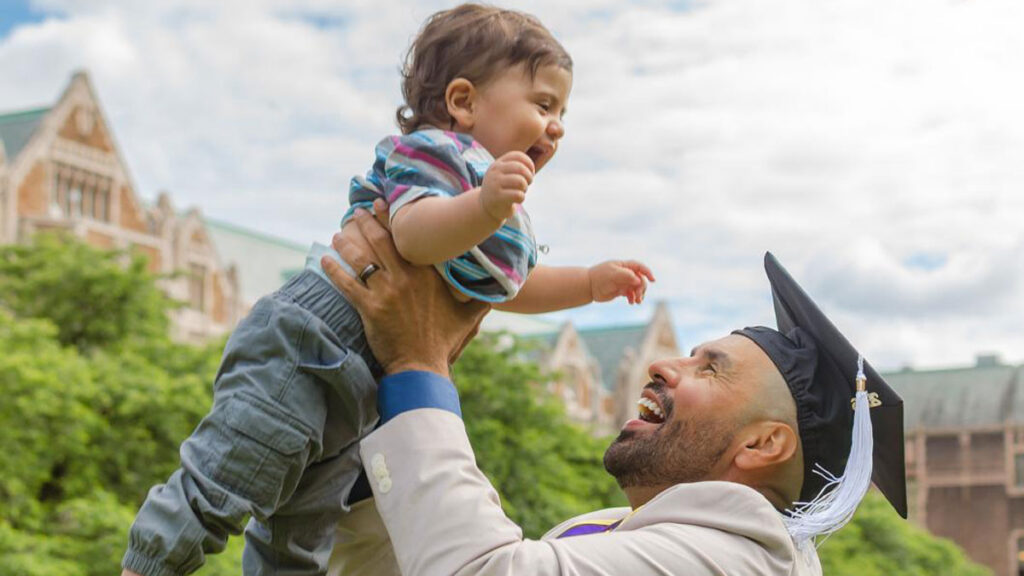
Ten days after my release, I walked into my first class at the University of Washington. Less than a year later, I became a father. My son changed what freedom meant to me.
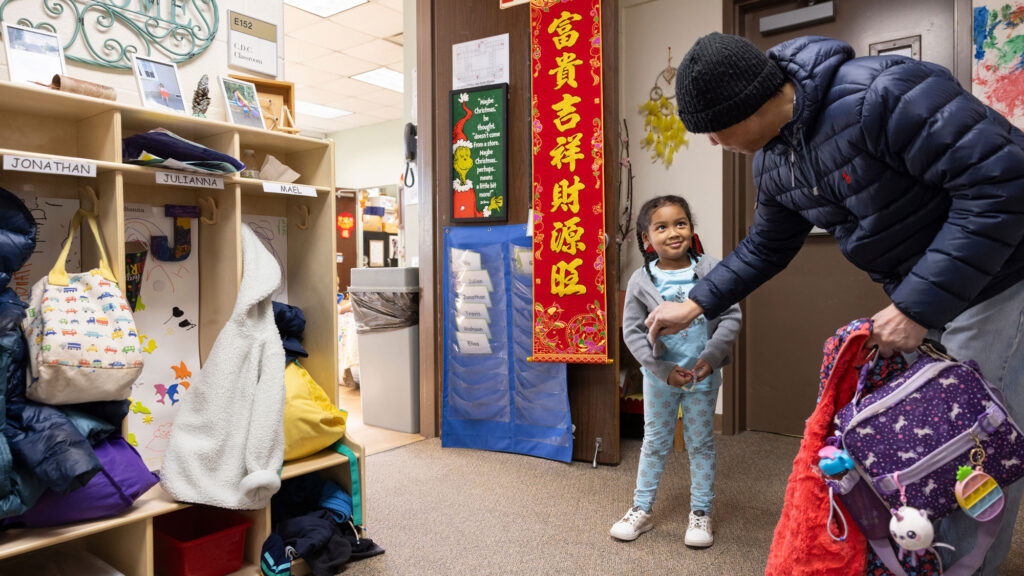
Student-parents need childcare. They need family-supporting policies. They need schedules that recognize that a sick child can change an entire day. They need institutions to understand that parenting is not an extracurricular activity competing with someone’s education. And formerly incarcerated student-parents can carry another set of responsibilities entirely.
Freedom was no longer simply the ability to go where I wanted or make decisions for myself. It came with responsibility. I had been given a second chance at a life I once thought was impossible, and suddenly there was a little boy whose life would be shaped, in part, by what I chose to do with mine.
But reentry is complicated. People often imagine release as a finish line. For me, coming home also meant learning how to carry the fact that I had left people behind.
After 22 years, the people in prison whom I lived alongside were not abstractions or statistics. Some had become family. I knew the work they had done to change. I knew their talents, their intelligence, and the things they dreamed about doing if they ever got another chance.
I also knew that some of them deserved to be home.
There is a survivor’s guilt that can come with receiving an opportunity that people you care about did not receive. Why me? Why was I given clemency when someone else was not? Why was I sitting in a classroom at the University of Washington while people I knew were still sitting in cells?
I don’t think I will ever completely resolve those questions. What I could decide was what to do with the opportunity. I became determined not to waste it.
At UW, I carried a full course load while working, serving my community, adjusting to life after more than two decades of incarceration and preparing for what I hoped would be law school. I believed my academic record would matter tremendously. I knew there were parts of my application that would look different from those of a traditional law school applicant, so I put enormous pressure on myself to maintain a 4.0.
Every paper mattered. Every exam mattered. Every grade mattered. I believed that if I could demonstrate what I was capable of in the classroom, my grades would help open the door to law school.
Eventually, I graduated from the University of Washington with the 4.0 I had fought so hard to maintain. I did not get into law school. That is part of my story, too. But while I was pursuing that GPA, I wasn’t only a student. I was also a new father.
A Six-Hour Commute
Like many student-parents, I did not have access to childcare that matched the realities of my education and work. My family lived in Eastern Washington, and moving everyone to Seattle would have made attending UW much easier for me. But Seattle’s cost of living made that unrealistic for our family.
So instead of moving my family closer to my education, I put the distance on myself.
On many school days, I would get up early and drive roughly three hours to Seattle. I would attend classes carrying a full course load, handle work and community responsibilities, and then get back in the car and drive three hours home. Then I would wake up and do it again.
There were easier arrangements. I could have stayed in Seattle more often. I could have found more couches to sleep on. I could have decided that getting through school required being away from home.
But being present mattered to me.
I had already lost more than two decades of my life to incarceration. I knew what absence felt like. I knew what it meant to love people from a distance and to watch life happen somewhere else.
Once I became a father, I could not accept the idea that pursuing my future required me to routinely disappear from my son’s. So, I drove home.
Even when it meant another three hours behind the wheel. Even when I knew I would have to turn around the next morning. Even when there was reading waiting for me and I was exhausted. But I wanted my son to grow up knowing that his father came home.
That arrangement came at a cost. Even trying to make it work, even the driving, even choosing presence over convenience, it was still hard on my family. My wife needed a husband. She did not sign up for this. When I came home, her life was supposed to get easier. In some ways, it became harder instead. That tension between opportunity and presence is something higher education does not always account for when we talk about student-parents.
What Student-Parents Need
We celebrate perseverance. We celebrate the student who works all day and studies after putting a child to bed. We celebrate the parent who somehow makes it to class, gets the paper submitted before midnight and shows up the next morning ready to do it again.
We call those stories inspiring, but sometimes, what we are actually describing is a failure of support.
I did not need someone to admire the fact that I was driving six hours in a day to attend college. I needed affordable childcare and affordable housing. I needed systems built around the reality that students can simultaneously be parents, workers, caregivers and members of communities that depend on them.
Student-parents need childcare. They need family-supporting policies. They need schedules that recognize that a sick child can change an entire day. They need institutions to understand that parenting is not an extracurricular activity competing with someone’s education. And formerly incarcerated student-parents can carry another set of responsibilities entirely.
Reentry means finding stability while learning how to live in a world that continued changing while you were gone. It can mean learning technology, navigating employment and supervision, rebuilding relationships and trying to establish financial security. For some of us, it also means carrying the people we left behind. My education has never felt like mine alone.
When I sat in a UW classroom, I thought about people I had served time with who were intelligent enough to be sitting beside me. When I received an award or another opportunity, I thought about the people who could have accomplished extraordinary things if someone had taken a chance on them.
That survivor’s guilt has never made me want to do less. It has made me feel responsible for doing more.
And then my son gave that responsibility a face. He gave purpose and urgency to my second chance at life.
Before he was born, I wanted to succeed because I understood how rare my opportunity was. After he was born, success meant something different. I wanted him to inherit something from me other than the consequences of my past. I wanted him to inherit possibility.
That is why the 4.0 mattered so much. It was never simply a number on a transcript. I believed it was evidence of what someone could do when given another chance.
My Future is my Family’s Future
Law school did not work out the way I expected this year. That was painful. I believed that if I earned the grades, served my community, demonstrated who I had become and graduated at the top of my class, the next door would open. It didn’t. So, I will knock on more doors.
I still intend to become an attorney. This cycle, I plan to apply to a broad range of law schools and ask them to consider not simply where my life began, but what I have done with the opportunities I fought to create after 22 years of incarceration.
In the meantime, I am not standing still. I will continue my education by pursuing an MBA. And that means I will continue to be a student-parent.
There will still be assignments and deadlines. There will still be work and family responsibilities. There will still be mornings when school and fatherhood compete for the same limited hours. But there is one difference now.
I understand that the path does not have to unfold according to the timeline I imagined for it to still be mine. I know what I know about myself: I belong in a law school classroom. My record shows what I do when I’m given an opportunity, and I’ll be applying broadly this cycle with that record standing on its own.
I work. I show up. And I bring other people with me. The people I left behind in prison are part of why I want to become an attorney. My son is part of why I will become one. One reminds me where I came from. The other reminds me where I am going.
Someday, my son will know that during the first year of his life, his dad was finishing college. He will know that there were nights when I drove across Washington State just to come home, sleep for a few hours, and turn around and do it again.
I don’t want him to hear that story because I want him to think his father was extraordinary. I want him to understand why I came home.
For 22 years, incarceration decided where I could go, who I could be with and what parts of life I was allowed to experience. When freedom finally gave me the chance to become a father, I understood that freedom was not simply about having choices. It was about what I chose to do with them.
I chose education. I chose my family. And whenever I could, I chose the long drive home.
Advice for Student-Parents
If you are a parent trying to finish a degree, hold down a job, raise a child, maybe rebuild a life after incarceration, I don’t have a simple formula for you. But here is what I would say.
Ask for help before you are desperate for it. The people around you cannot support what they do not know you are carrying. Build a support system before you think you need one, family, mentors, other student parents who understand the specific math of your days.
Give yourself permission to redraw the timeline instead of abandoning the goal; a delayed acceptance, a slower path, a year that doesn’t go the way you planned, none of that is a closed door. And measure your progress by whether you are still showing up for your child, not only by whether you are keeping pace with everyone else in your program.
The grades matter. The degree matters. But your kid will remember whether you were there. Higher education should not force student parents to choose between those things.
If we truly believe education changes lives, then we have to build colleges where parents can pursue their dreams without sacrificing their presence in their children’s lives. That means affordable childcare, family-supporting policies, housing students can afford, and a broader understanding of what students may be carrying when they walk into a classroom.
I graduated from the University of Washington with the 4.0 I fought so hard to maintain. Law school will come next. The timeline has just shifted from what I first imagined. Until then, I will keep learning. I will keep working. I will keep advocating for the people I left behind.
And at the end of the day, I will keep coming home to my son. Because of everything freedom has given back to me, being his father is the opportunity I refuse to waste.
Benjamin Villegas-Brockie is a 2026 Justice Fellow


 September 25, 2026 by Benjamin Villegas-Brockie