

Low Academic Standards Spare Adult Feelings at the Expense of Students’ Futures
As states lower the bar for graduation and grade-level tests, students can pass without mastering almost any high school skills


As states lower the bar for graduation and grade-level tests, students can pass without mastering almost any high school skills
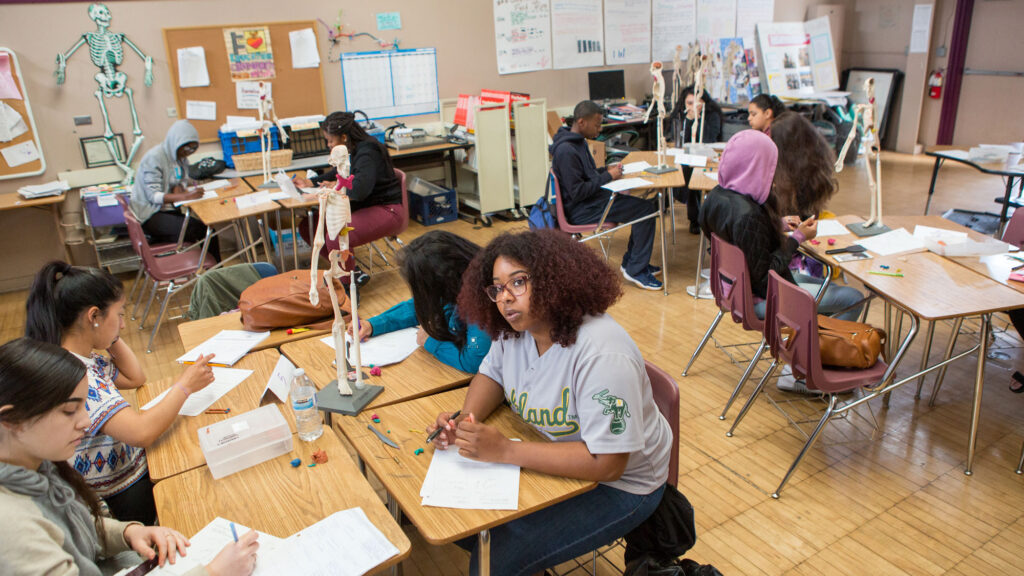
As students are going back to school across the country, some states are quietly lowering the bar for what it means for students to be academically ready for meaningful college and career pathways — telling a story of progress that is pure fantasy.
Take Florida. A recent USA Today investigation examined the state’s use of the Classical Learning Test (CLT) for graduation — a test that fails in terms of both inclusion and rigor. Since Florida approved the test in 2023, its graduation rate has climbed from 88% to 92% in 2025. Some districts jumped even more: Duval County Public schools saw graduation rates rise 7 percentage points — nearly double the rate of the state — and in Hillsborough County, the graduation rate climbed to a record-breaking 91%, with 1 in 6 students graduating using CLT in 2025.
Given that an estimated 72% of jobs are projected to require education or training beyond high school by 2031, it is important that we have high standards for all students when it comes to being ready for college and career, regardless of their zip code or background.
Why are more students crossing the finish line? Because CLT is far easier than other options — particularly in math, where a quarter of the questions cover middle school concepts, compared to just 13% on the ACT and 4% on the SAT. So, students can pass without mastering almost any high school skills.
And Florida is just one example. At least it still requires something to graduate. Since 2014, the number of states requiring students to pass a test to graduate has dropped from 24 to just six.
The erosion goes beyond graduation. States are also quietly lowering the bar for what it means to be “on grade level” — a shift underway in red states (Alaska, Oklahoma) and blue states (New York, Wisconsin) alike.
Two states want to go further still. Both Alabama and Idaho have asked the U.S. Department of Education for waivers from federal assessment requirements that would lower standards for academic mastery in high school. Alabama has proposed combining scores from ACT and WorkKeys — a workforce skills-based assessment that, like the CLT, leans heavily on below-grade-level content. Idaho wants to let students pick from a menu of tests with wildly different purposes and rigor: the SAT, ACT, CLT, WorkKeys, and even the military’s entrance exam (the ASVAB). That wouldn’t just set different expectations for different students; it would erase the ability to compare student achievement across schools, districts, and student groups — the very thing that help schools, parents, and communities understand where resources are needed most, and where there are gaps in student groups accessing rigorous coursework and supports to succeed.
Here’s what these moves really do: they hand school, district, and state leaders a false sense of accomplishment — a graduation rate gain to celebrate, an academic achievement boost to tout. But the gains are cooked books, not real learning. Students and their families are told they’re ready for college and career when many — especially students of color and students from low-income backgrounds — were never given the opportunities and support to actually get there.
The honesty gap has a price tag: Students who are told they’re ready show up to college but need remedial support. Nationally, 40% of students at public two-year colleges and 1 in 4 at public four-year colleges took one or more remedial courses, paying tuition for classes that earn no credit toward a degree while their debt climbs. It compounds the barriers that leave so many behind: 46% of Latino students and 57% of Black students who enroll in college never earn a degree. Given that an estimated 72% of jobs are projected to require education or training beyond high school by 2031, it is important that we have high standards for all students when it comes to being ready for college and career, regardless of their zip code or background.
Many of the decisions that determine metrics and assessments for college and career readiness unfold quietly, in state board meetings and agency decisions that rarely make headlines. That’s exactly why advocates have to stay vigilant — and keep pushing back before high standards erode any further.

 June 04, 2026 by Genesis Carela
 Thousands of middle and high school students in Massachusetts are struggling to meet grade-level literacy expectations — and too often, policymakers are ignoring the problem
 March 27, 2026 by Nicolle Grayson
 Good Teaching Matters, a seminal EdTrust report from 1998, looks at the state of education in the U.S. and the persistent inequities that hold students back. That message still resonates today
 March 05, 2026 by Kurt Russell
 The Department of Education’s “patriotic education” is an attempt to whitewash U.S. history and suppress the truth about America’s past